What Is an Exhibition Stand? Complete Guide
Over 80 percent of american businesses consider trade shows essential for brand growth, making exhibition stands a key part of their marketing strategy. In a crowded event hall, the right display can decide whether a brand captures attention or gets ignored. Understanding exhibition stands, their types, and important design features helps companies build engaging spaces that leave a strong impression and create valuable connections.
Table of Contents
- Defining Exhibition Stands And Their Purpose
- Popular Types Of Exhibition Stands Compared
- Essential Features And Design Elements
- Exhibition Stand Setup And Management Process
- Costs, Rental Options, And Common Pitfalls
Key Takeaways
| Point | Details |
|---|---|
| Exhibition Stands as Strategic Tools | Exhibition stands serve as dynamic platforms for showcasing products, engaging potential clients, and enhancing brand visibility at events. |
| Types of Stands and Their Suitability | Understanding the differences between modular, custom-built, shell scheme, and inline stands helps businesses select the most effective option based on their goals and budget. |
| Importance of Design Elements | Key design features like visual branding, spatial optimization, and technology integration significantly enhance audience engagement and brand messaging. |
| Financial Considerations | Businesses should account for hidden costs and explore rental options to manage budget effectively while avoiding common pitfalls like design inflexibility and performance tracking gaps. |
Defining Exhibition Stands and Their Purpose
An exhibition stand represents a strategic business platform designed to showcase a company’s products, services, and brand identity within trade shows, conferences, and industry events. Unlike typical marketing displays, these specialized structures serve as dynamic, three-dimensional marketing tools that transform abstract brand concepts into immersive physical experiences.
At its core, an exhibition stand functions as a portable brand environment engineered to attract, engage, and communicate with potential clients, partners, and industry professionals. These carefully crafted spaces go beyond mere visual presentation – they are meticulously designed communication hubs that facilitate meaningful interactions, generate business leads, and create memorable brand impressions.
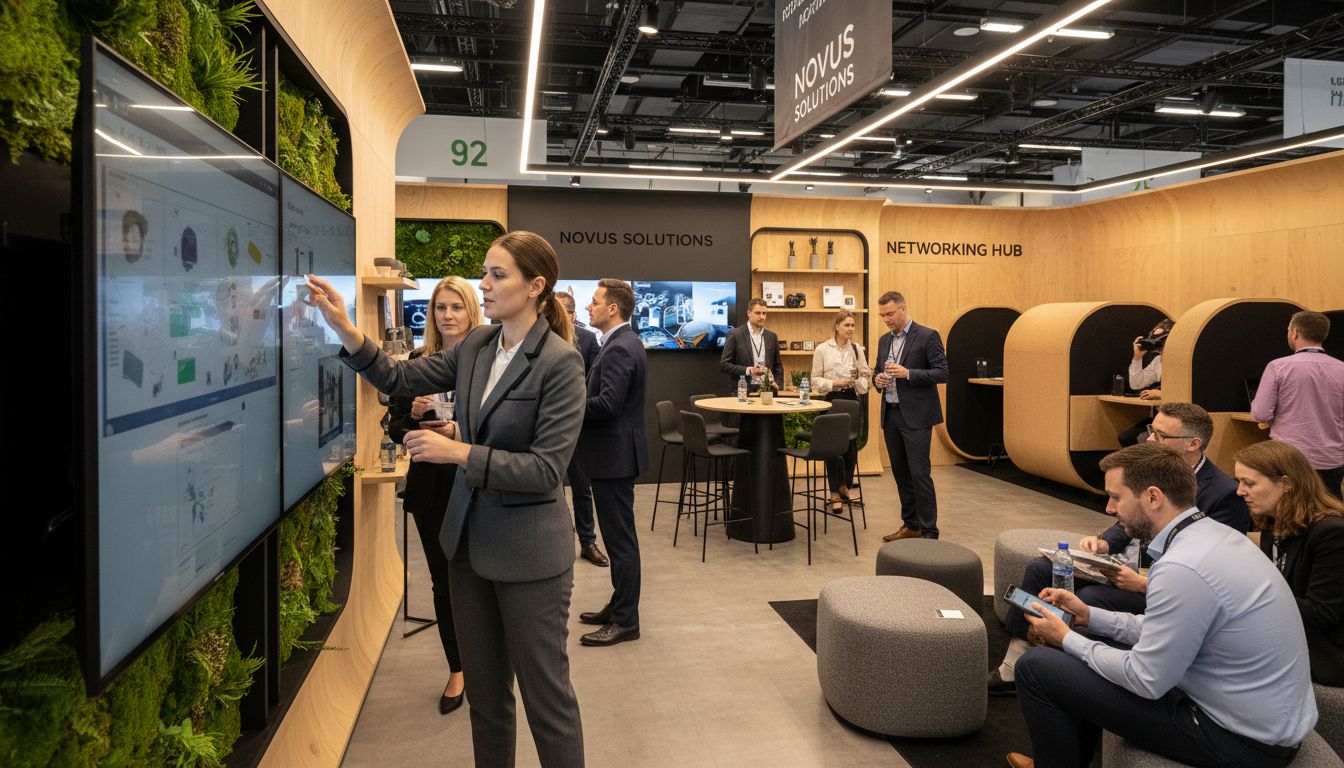 Companies invest significant resources in designing stands that not only reflect their visual identity but also communicate their core values, innovative capabilities, and competitive advantages.
The primary purposes of exhibition stands encompass several critical business objectives:
- Brand Visibility: Creating a standout visual presence that distinguishes a company from competitors
- Lead Generation: Facilitating direct interactions with potential customers and industry decision makers
- Product Demonstration: Providing interactive platforms to showcase product features and capabilities
- Networking: Establishing professional connections and exploring partnership opportunities
- Market Research: Gathering real-time feedback and insights from industry professionals
For businesses seeking comprehensive insights into creating impactful exhibition experiences, our guide to custom exhibition stands in Europe offers an in-depth exploration of strategic design principles and industry best practices.
Popular Types of Exhibition Stands Compared
Exhibition stands represent diverse marketing platforms with unique design approaches tailored to different business objectives and event requirements. Understanding the various types helps companies strategically select the most effective display solution for their specific brand communication needs.
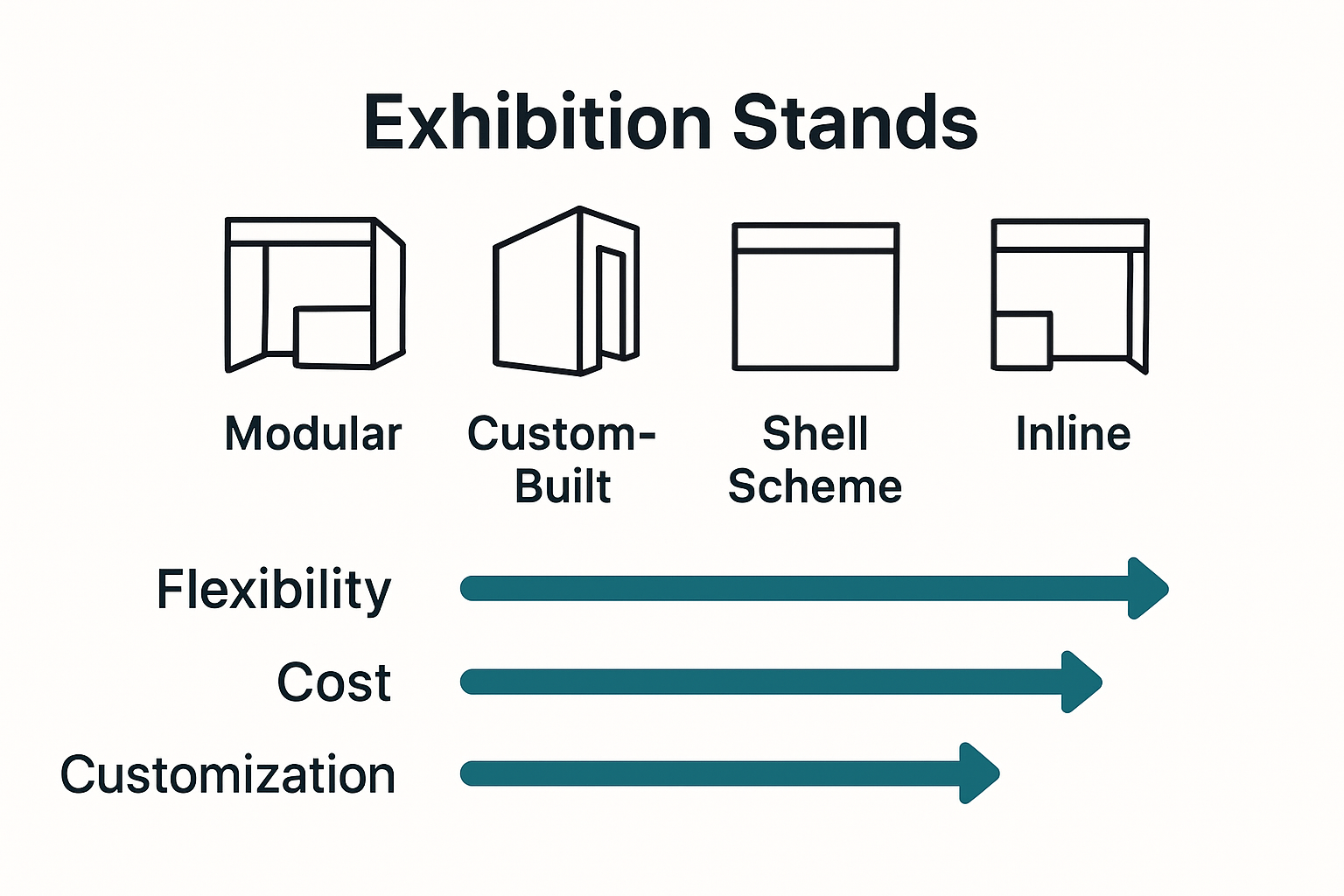
The primary categories of exhibition stands include modular, custom-built, shell scheme, and inline configurations. Modular stands offer exceptional flexibility, allowing businesses to reconfigure and adapt their display across multiple events with minimal additional investment. These stands feature standardized components that can be easily assembled, disassembled, and reconfigured, making them ideal for companies seeking cost-effective and sustainable exhibition solutions.
Key exhibition stand types can be compared across several critical dimensions:
| Stand Type | Flexibility | Cost | Customization | Best Suited For |
|---|---|---|---|---|
| Modular | High | Low to Medium | Medium | Recurring events, budget-conscious firms |
| Custom-Built | Low | High | Very High | Unique brand experiences, one-off events |
| Shell Scheme | Low | Low | Limited | First-time exhibitors, small businesses |
| Inline | Medium | Medium | Medium | Standard conference environments |
For businesses looking to explore comprehensive insights into selecting the right exhibition stand, our guide to exhibition stand types provides an in-depth analysis of strategic design considerations and industry best practices. Understanding these variations enables companies to make informed decisions that maximize their brand visibility and engagement potential at trade shows and professional events.
Essential Features and Design Elements
An exceptional exhibition stand is more than a visual backdrop – it’s a sophisticated communication tool engineered to capture attention, convey brand messaging, and create meaningful engagement. Strategic design elements transform these physical spaces from mere display areas into powerful marketing instruments that can significantly impact a company’s trade show performance and brand perception.
The fundamental design components of a high-performing exhibition stand encompass several critical architectural and functional considerations. Structural integrity becomes paramount, with designers focusing on creating lightweight yet sturdy frameworks that can be rapidly assembled and transported. Modern stands increasingly incorporate sustainable materials and modular construction techniques, enabling businesses to reduce environmental impact while maintaining flexibility. Innovative design elements such as integrated technology interfaces, adjustable lighting systems, and ergonomic visitor interaction zones have become standard expectations for professional exhibition environments.
Key design features that distinguish top-tier exhibition stands include:
- Visual Branding: Seamless incorporation of brand colors, logos, and visual identity
- Spatial Optimization: Intelligent layout planning to maximize visitor flow and interaction
- Technology Integration: Embedded digital displays, interactive touchscreens, and multimedia presentations
- Functional Zones: Dedicated areas for product demonstrations, private conversations, and networking
- Aesthetic Sophistication: Clean lines, professional finishes, and contemporary design principles
For professionals seeking deeper insights into crafting compelling exhibition stand designs, our exhibition stand fabrication guide offers comprehensive strategies for creating memorable brand experiences that resonate with target audiences and drive meaningful business connections.
Exhibition Stand Setup and Management Process
The exhibition stand setup and management process is a complex, multi-stage strategic operation that requires meticulous planning, precise execution, and comprehensive coordination across multiple professional disciplines. Successful implementation transforms a conceptual design into a dynamic, functional marketing environment that effectively communicates a brand’s core message and creates meaningful audience engagement.
The comprehensive setup process typically involves several critical phases, beginning with initial conceptualization and progressing through detailed design, fabrication, transportation, on-site assembly, and post-event evaluation. Professional exhibition designers play a pivotal role in translating brand requirements into functional spatial experiences, utilizing advanced visualization techniques including detailed sketches, computer-generated renderings, and precise scale models. These professionals collaborate closely with marketing teams to ensure that every design element strategically supports the company’s communication objectives and creates maximum visual impact.
Key stages of the exhibition stand management process include:
- Pre-Event Planning: Developing comprehensive design concepts, creating detailed technical specifications
- Design Visualization: Producing 3D renderings, scale models, and interactive design prototypes
- Fabrication: Constructing stand components using specialized materials and manufacturing techniques
- Logistics Management: Coordinating transportation, shipping, and on-site delivery of stand components
- On-Site Assembly: Precise installation and configuration of stand elements within event space
- Performance Monitoring: Tracking visitor interactions, collecting real-time engagement metrics
- Post-Event Evaluation: Analyzing stand performance, gathering feedback for future improvements
For exhibitors seeking a comprehensive roadmap to successful exhibition stand design, our guide to designing exhibition stands offers an in-depth exploration of strategic planning, visual communication techniques, and proven methodologies for creating compelling brand experiences that drive meaningful business connections.
Costs, Rental Options, and Common Pitfalls
Navigating the financial landscape of exhibition stands requires strategic planning and a nuanced understanding of budget allocation, rental mechanisms, and potential hidden expenses. Exhibition stand investments represent significant marketing expenditures that demand careful consideration, with costs varying dramatically based on design complexity, size, customization level, and event requirements.
Rental and ownership options provide businesses with flexible approaches to exhibition stand procurement. Custom-built stands typically represent the most expensive option, requiring substantial upfront investment and long-term storage considerations. Modular and rental stands offer more economical alternatives, allowing companies to access professional-grade displays without the significant capital expenditure associated with permanent structures. These flexible solutions enable businesses to adapt their exhibition strategy dynamically, scaling their presence up or down based on specific event needs and budgetary constraints.
Common financial and strategic pitfalls in exhibition stand management include:
- Budget Underestimation: Failing to account for hidden costs like transportation, installation, and on-site modifications
- Design Inflexibility: Creating stands that cannot be repurposed or adapted for multiple events
- Overlooking Logistics: Neglecting comprehensive planning for stand assembly, dismantling, and storage
- Technology Integration Challenges: Inadequate planning for digital display and interactive element requirements
- Brand Misalignment: Designing stands that do not authentically represent company visual identity
- Performance Tracking Gaps: Lack of mechanisms to measure exhibition stand effectiveness and ROI
For businesses seeking comprehensive guidance on navigating exhibition stand investments and avoiding costly mistakes, our guide to designing exhibition stands provides strategic insights into creating cost-effective, impactful brand experiences that maximize marketing investments.
Elevate Your Brand with Expert Exhibition Stand Solutions
The challenge of turning your brand vision into a visually compelling and functional exhibition stand is a key focus of the complete guide on exhibition stands. Businesses often struggle with designing flexible, cost-effective, and impactful displays that generate leads and create lasting impressions. Common obstacles include managing complex setup processes, integrating technology seamlessly, and ensuring the stand truly reflects your brand identity.
At Adam Expo Stand, we specialize in overcoming these challenges through personalized turnkey services that cover every stage from custom design and 3D visualization to fabrication, logistics, and on-site assembly. Our sustainable modular and rental options help reduce costs without sacrificing quality, so you can focus on what matters most: engaging your audience and maximizing ROI. Learn more about our comprehensive approach by visiting our landing page, explore insightful strategies in our exhibition stand fabrication guide, or discover effective design techniques with our guide to designing exhibition stands.
Don’t let exhibition stand complexities hold back your trade show success. Act now to partner with experienced professionals who turn your brand goals into standout realities. Visit Adam Expo Stand today and start your journey toward a captivating, high-performing trade show presence.
Frequently Asked Questions
What is the primary purpose of an exhibition stand?
The primary purpose of an exhibition stand is to create a dynamic environment that showcases a company’s products and services, engaging potential clients and generating business leads.
What are the different types of exhibition stands?
The primary types of exhibition stands include modular, custom-built, shell scheme, and inline stands, each with unique characteristics suited for different business objectives and event requirements.
How can I effectively design an exhibition stand?
To effectively design an exhibition stand, focus on visual branding, spatial optimization, technology integration, functional zones, and aesthetic sophistication to create an engaging experience for visitors.
What are some common pitfalls in exhibition stand management?
Common pitfalls include budget underestimation, design inflexibility, overlooking logistics, challenges with technology integration, brand misalignment, and gaps in performance tracking.