Have you ever been excited to go somewhere, only to find out you couldn’t get in? Maybe a door was too heavy to open, or a shelf was too high to reach. It doesn’t feel very good, does it?
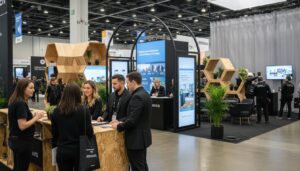
Now, imagine walking into a huge, colorful exhibition hall. There are amazing booths everywhere, but some of them have stairs with no ramps or signs with tiny writing that no one can read. That’s a big problem! When we build spaces that leave people out, we miss the chance to make new friends and share our cool ideas with the world.
That is exactly why ADA compliance is so important. It sounds like a big, fancy term, but it really just means making sure your space is safe and welcoming for everyone. Whether someone uses a wheelchair, has trouble seeing, or just needs a little extra space, an accessible exhibition stand ensures that nobody gets left behind.
In this guide, we are going to show you exactly how to make trade show booths ADA compliant without any stress. We will explore the magic of inclusive design, which is just a way of building things so that every single person can enjoy them.
Ready to build a booth that is fair, fun, and open to all? Let’s dive in and learn how to create a space where everyone belongs.
Understanding Accessibility Standards
Have you ever played a game with rules? The rules make sure everyone plays fairly and has a good time. Well, when we build things like exhibition stands, there are rules for that too! These rules are called accessibility standards, and they’re like a recipe for making sure everyone feels included. They guide us on how to build spaces that are easy for every single person to use.
What Is ADA Compliance, and Why Is It Important?
Think of ADA compliance as a set of super important rules in the United States. The letters “ADA” stand for the Americans with Disabilities Act. This law was created a long time ago to make sure that people with disabilities are treated fairly. When it comes to your booth, being ADA compliant means you’re following the rules to make it welcoming for everyone. This could mean having enough space for a wheelchair to get through or making sure your signs are easy to read. Following these rules isn’t just about being nice; it’s about making sure you’re not leaving anyone out of the fun.
How Does the European Accessibility Act Impact Exhibition Stands?
If you’re taking your awesome booth to Europe, you’ll need to know about another set of rules: the European Accessibility Act (EAA). Just like the ADA, the EAA is all about making things accessible for people with disabilities. It’s like Europe’s own fairness playbook. For exhibition stands, this means making sure everything from your digital displays to the physical layout of your booth is easy for all visitors to interact with. It ensures that no matter where you are, you’re creating a positive experience for every guest.
Key Differences Between ADA and EAA Standards
So, are these two sets of rules exactly the same? Not quite! Think of it like two different recipes for chocolate chip cookies. Both make delicious cookies, but they might use slightly different ingredients. The ADA and EAA have the same wonderful goal: to make things accessible. However, they might have slightly different requirements for things like the width of a ramp or the height of a counter. It’s important to know which rules apply to your event so you can be sure your booth is a perfect, welcoming space for everyone who stops by.
Designing for Accessibility
Now that we know the rules, let’s get to the fun part: building an amazing space where everyone can have a great time! Designing for accessibility isn’t about boring checklists; it’s about being a thoughtful host. Think of it as planning the best party ever. You want to make sure all your friends can get in, move around, and enjoy the fun. Let’s look at how you can turn your booth into a welcoming place for every single visitor.
How to Make Your Exhibition Stand ADA Compliant
Making your stand ADA compliant is like following a friendly recipe for success. It starts with thinking about how people will move through your space. Imagine someone using a wheelchair or walking with a cane. Are the pathways wide enough for them to glide through without bumping into things? A good rule of thumb is to have clear paths that are at least 3 feet wide. Also, think about your counters. If they are too high, some people won’t be able to see your awesome products or talk to your team. Keeping things at a comfortable height for both standing and seated visitors makes everyone feel seen and included.
What Are the Essential Features of an Accessible Booth?
An accessible booth has a few key ingredients that make it special. First, it has a smooth and level floor. No sneaky steps or bumps to trip over! Second, the lighting is just right, not too dark and not too glaring, so everyone can see clearly. Third, any text you use on signs or screens is big, bold, and easy to read. Using colors that contrast, like dark letters on a light background, helps a lot. Finally, if you have videos playing, make sure to include captions. This way, people who are hard of hearing won’t miss out on what you have to say. These small details make a world of difference.
The Role of Universal Design in Exhibition Stands
Have you ever seen a ramp next to a set of stairs? That’s a perfect example of universal design! It’s the simple but brilliant idea of creating things that work for everyone, no matter their age or ability. A person in a wheelchair can use the ramp, but so can a parent pushing a stroller or a delivery person with a heavy cart. When you apply universal design to your booth, you’re not just solving a problem for one group of people; you’re making the experience better for everyone. It’s about creating a space that is naturally easy and enjoyable for every single person who walks in.
Practical Tips for Inclusive Booth Design
Ready to roll up your sleeves and get creative? Making an inclusive booth is all about the little details that add up to a big, warm welcome. Think of yourself as the ultimate party planner, making sure every guest has a fantastic time. Here are some simple, practical tips to help you build a booth that’s a hit with everyone.
Checklist for ADA Compliant Exhibition Stands
Sometimes, a good checklist is all you need to get started. Here are a few must haves for an ADA compliant stand:
- Ramps for All Steps: If your booth floor is raised, even by a tiny bit, add a sturdy ramp.
- Wide, Clear Pathways: Make sure your aisles are at least 36 inches wide so everyone can move around easily.
- Low Counters and Tables: Have at least one counter that is low enough for someone in a wheelchair to use comfortably.
- Easy to Read Signs: Use large, clear fonts and colors that stand out.
- No Clutter! Keep your floor space free of boxes, cords, or anything else someone could trip on.
Following this simple list is a great first step toward creating a truly inclusive booth.
How to Optimize Booth Layout for Mobility and Visual Accessibility
Let’s think about your booth’s layout like it’s a map for an adventure. You want the path to be clear and exciting for everyone. For mobility, arrange your furniture and displays to create an open, circular flow. This helps people avoid getting stuck in dead ends. Leave plenty of room around your interactive displays so people can get up close.
For visual accessibility, lighting is your best friend. Make sure your booth is well lit, but avoid super bright, glaring spotlights that can make it hard to see. Use signs with simple pictures or symbols to help guide people. Thinking about how people will move and see is a superpower in booth design!
Creating Sensory Friendly Spaces in Exhibition Stands
Trade shows can be noisy and overwhelming. All the lights, sounds, and crowds can be a lot for some people. That’s where sensory friendly spaces come in. These are small, quiet areas within your booth where someone can take a short break. It doesn’t have to be a whole separate room. It could be a cozy corner with a comfortable chair, softer lighting, and maybe some noise canceling headphones. By offering a calm spot, you’re showing incredible kindness and making your booth a safe haven for visitors who might feel overstimulated. It’s a thoughtful touch that people will remember.
Beyond Compliance: The Business Case for Accessibility
Following the rules is important, but what if being thoughtful and inclusive could also be a secret superpower for your business? Creating an accessible booth isn’t just about checking boxes on a list; it’s about opening your heart and your business to more people. When you do that, something truly magical happens. You’ll find that being kind is also incredibly smart. Let’s explore why making your booth accessible is one of the best decisions you can make.
Why Inclusive Design Is Good for Your Brand
Think about your favorite brands. What makes them special? Often, it’s because they make you feel good. When your brand uses inclusive design, it sends a powerful message: “We care about everyone.” People notice this. They see that you’ve put in the effort to make everyone feel welcome, and it builds a special kind of trust and loyalty. A brand that is kind and considerate is a brand people want to support. An accessible booth shows that your company has a big heart, and that makes your brand shine brighter than the rest.
How Accessibility Enhances Visitor Engagement and ROI
Have you ever heard the saying, “the more, the merrier”? This is especially true at a trade show. When you create an accessible booth, you are literally opening the door to more visitors. There are over 1 billion people in the world with some form of disability, and they have friends and family who care about them, too. By welcoming them, you are connecting with a huge audience that your competitors might be ignoring.
Greater visitor engagement means more people are interacting with your products, talking to your team, and learning about what makes you great. This leads to more sales and better relationships. In business terms, this is called a great Return on Investment (ROI), which is just a fancy way of saying your efforts paid off in a big way!
Real Life Examples of Successful Accessible Booths by Adam Expo Stand
At Adam Expo Stand, we’ve seen this magic in action time and time again. We once worked with a company that wanted to showcase its new technology. We designed a booth with wide, clear pathways, interactive displays at multiple heights, and a quiet corner for people to take a break. The result? Their booth was buzzing with happy visitors all day long! People using wheelchairs, families with strollers, and visitors who just needed a moment of calm all felt comfortable and stayed longer. The company told us they had more meaningful conversations and gathered more leads than ever before. It proved that a thoughtful design isn’t just a feature, it’s the key to an unforgettable experience.
Future Trends in Accessible Exhibition Design
The world is always changing, and so are the ways we create amazing experiences for everyone. What’s next for accessible exhibition design? The future is bright, imaginative, and full of brilliant ideas that make it even easier to include everyone. Let’s peek into the future and see what cool trends are on the horizon. These new ideas will help us build even better, friendlier spaces for all.
The Rise of Modular and Sustainable Stands
Imagine building with giant, reusable LEGO blocks. That’s the idea behind modular stands! These are cool, pre made pieces that can be put together in all sorts of ways to create a unique booth. Because they can be easily changed and reused, they are fantastic for accessibility. Need a ramp today and a wider entrance tomorrow? A modular stand can adapt in a snap! They are also great for our planet because we can use them again and again, which means less waste. This smart, flexible approach makes it easier and more affordable to create a welcoming space for every event.
How Technology Is Shaping the Future of Accessibility
Technology is like a magic wand for accessibility. Think about using your phone to get a personal audio tour of a booth if you can’t see well. Or what about interactive screens that can adjust their height with the touch of a button? This is already happening! In the future, we’ll see even more amazing tech, like virtual reality experiences that let people explore a booth from anywhere in the world. Technology is creating exciting new ways to break down barriers and ensure that everyone can participate in the fun, no matter where they are or what their needs may be.
Preparing for the Next Wave of Accessibility Regulations
Just as game rules get updated to make things fairer, accessibility regulations will continue to evolve. Governments and organizations are always learning new ways to make the world a more inclusive place. This means that in the future, the rules for building accessible spaces will likely become even more detailed and helpful. Staying ahead of these changes is smart. By already thinking about things like sensory friendly design and digital access, you can be a leader. Preparing for tomorrow’s rules today shows that you are truly committed to welcoming every single person, every single time.
FAQs
What Are the Penalties for Non Compliance with Accessibility Standards?
Nobody likes getting in trouble, right? Ignoring accessibility standards can lead to some not so fun consequences. In many places, like the United States and Europe, there are laws that say public spaces must be open to everyone. If a booth isn’t accessible, a company might have to pay a fine, which is like a grown up time out that costs money. But the biggest penalty isn’t money, it is missing out on making friends! If people can’t visit your booth, they can’t see how awesome you are. Plus, people might think your brand doesn’t care about including everyone, and that can hurt your reputation. Being kind and following the rules is always the safer, smarter choice.
How Can I Ensure My Booth Meets Both ADA and EAA Requirements?
This might sound tricky, like trying to follow two different recipes at once, but it is actually quite doable! The trick is to aim for the highest standard. Since ADA and EAA requirements both want the same thing, fairness and safety, you can often satisfy both by choosing the option that helps the most people. For example, if one rule says a path needs to be 32 inches wide and the other says 36 inches, go with 36! That way, you are safe no matter where you are. It is also a great idea to work with experts like Adam Expo Stand who know these rules inside and out. We can be your guide to make sure you get a gold star in every country!
What Are the Most Cost Effective Ways to Make a Booth Accessible?
Guess what? Being inclusive doesn’t have to cost a fortune. There are plenty of smart, cost effective accessibility tricks you can use. One of the best ways is simply arranging your furniture wisely. Leaving wide, open spaces doesn’t cost a penny! You can also print your signs with large, clear letters instead of fancy, expensive graphics that are hard to read. Another great tip is to train your team. Teaching your staff to be helpful, patient, and welcoming is free, and it makes a huge difference to visitors. Sometimes, the most valuable changes are just about being thoughtful and organized
Conclusion
We have been on quite a journey together, haven’t we? We learned that building a booth isn’t just about putting up walls and lights. It is about building a bridge that welcomes every single person to your party. When you choose accessible exhibition design, you are doing something really special. You are telling the world that fairness and kindness matter just as much as selling cool products.
By following these simple rules and tips, you are making sure no one feels left out. Whether it is a ramp for a wheelchair or a quiet corner for someone who needs a break, every little detail counts. You are creating a space where everyone feels safe, happy, and ready to connect with your brand. That is the true magic of an inclusive design!
Adam Expo Stand: Your Partner in Accessible Exhibition Design
Building the perfect booth might feel like a big project, but you don’t have to do it alone. Think of Adam Expo Stand as your friendly guide on this adventure. We know all the rules, the tricks, and the best ways to make your space shine. We love turning tricky challenges into beautiful solutions. Our team is passionate about creating stands that aren’t just compliant with the law, but are also warm and welcoming for everyone. We believe that an inclusive booth is the best kind of booth, and we are here to help you build it from the ground up.
Call to Action: Contact Us for Your Next Inclusive Booth
Are you ready to create something amazing? Let’s work together to build a booth that everyone can enjoy! Don’t let confusing rules or big checklists scare you away. Reach out to us today, and let’s start planning your next big event. Whether you have a clear idea or just a dream, we can make it happen. Contact Adam Expo Stand now, and let’s show the world how powerful kindness and great design can be.