Display Technology’s Impact on Modern Exhibitions
Standing out at a busy trade show is never as simple as setting up a pretty booth. For European marketing managers, the challenge is blending visual impact, meaningful engagement, and sustainability into a single exhibition strategy. As display technology rapidly evolves from static posters to interactive, multi-sensory experiences, smart choices now mean connecting with your audience in ways that last beyond event day. This article breaks down display technology essentials and trends so you can plan with confidence and deliver results that matter.
Table of Contents
- Defining Display Technology in Exhibitions
- Key Display Technology Variations Explained
- Features That Drive Attendee Engagement
- Integration Trends Shaping Exhibit Designs
- Cost Factors and Sustainability in Display Selection
- Common Mistakes to Avoid in Exhibit Technology
Key Takeaways
| Point | Details |
|---|---|
| Understand Display Technology | Display technology includes digital screens, interactive displays, and augmented reality, all designed to enhance visitor engagement. Strategic selection aligns technology with exhibition goals for better results. |
| Focus on Attendee Interaction | Effective booth designs prioritize personal interaction and hands-on experiences, fostering deeper connections with the brand. Technology should facilitate these engagements, not replace human interaction. |
| Evaluate Cost and Sustainability | Opting for sustainable display technologies, though initially more costly, can yield better long-term financial performance and brand reputation. Consider total cost of ownership over multiple exhibitions. |
| Avoid Common Mistakes | Successful exhibit technology investments require clearly defined goals and proper staff training. Prioritize technology that directly supports your objectives and prepare staff for operational challenges. |
Defining Display Technology in Exhibitions
Display technology in exhibitions refers to the integrated systems and tools that transform how brands present information, products, and stories to attendees. At its core, this technology moves beyond static posters and printed materials to create interactive, multi-sensory experiences that grab attention and drive meaningful engagement. For European marketing managers planning trade show participation, understanding what display technology actually encompasses is the foundation for making smart investment decisions about your booth design.
The scope of display technology has expanded dramatically in recent years. It now includes digital screens ranging from standard flat panels to cutting-edge LED walls, projection mapping systems that transform booth architecture into dynamic canvases, touch-sensitive interactive displays that let visitors explore your products directly, and augmented reality (AR) installations that layer digital content over physical items. Research from leading institutions highlights how these innovations create vivid, immersive experiences that transform traditional exhibition formats entirely. When you integrate these technologies strategically, visitors don’t just see your brand—they experience it through multiple sensory channels, which dramatically increases information retention and emotional connection. The core benefit is measurable: attendees spending more time at your booth, asking better questions, and leaving with stronger brand recall than they would from a conventional display.
What makes modern display technology particularly valuable for your exhibition strategy is its flexibility. A sophisticated booth doesn’t require every technology at once. Some companies use strategically placed interactive displays to showcase product demonstrations, while others rely on high-impact LED screens paired with thoughtfully designed physical layouts. The key distinction between basic exhibition displays and truly effective ones lies in purposeful technology selection. Your choice should directly support your primary exhibition goal—whether that’s generating qualified leads, launching a new product line, or solidifying relationships with existing clients. The technology becomes a bridge between your brand message and your audience’s willingness to engage.
Pro tip: Start by defining one core visitor action you want to achieve at your booth (product demonstration, lead capture, or brand education), then select display technologies that directly support that action rather than adding technology for its own sake.
Key Display Technology Variations Explained
When evaluating display options for your exhibition booth, you’re essentially choosing between several distinct technology types, each with its own strengths and practical applications. The landscape has shifted dramatically toward LED-based solutions, particularly direct-view LED displays that offer superior brightness, flexibility in sizing, and impressive visual impact compared to older LCD technology. However, understanding the specific variations matters because your choice directly affects both your budget and the visitor experience you can deliver. Let’s break down the main players so you can make an informed decision aligned with your exhibition objectives.
LED displays remain the workhorse of modern exhibition technology, and they’ve evolved significantly. Direct-view LED comes in different pixel pitches (the distance between individual LED points)—super-fine pixel pitch LEDs deliver crystal-clear detail at close viewing distances, making them ideal for product showcases or detailed information displays, while larger pixel pitches work better for impressive distance viewing from across the exhibition floor. Mini and Micro LED technologies represent the cutting edge, offering superior image quality with better color accuracy and contrast ratios than traditional LEDs. These newer variations consume less power and generate less heat, which matters when you’re running your booth continuously throughout a multi-day event. OLED displays, though still emerging in exhibition applications, provide exceptional contrast and vibrant colors by emitting light independently from each pixel—the tradeoff is higher cost and more careful handling requirements. LCD technology, while less trendy than LED, still serves specific purposes where you need ultra-high resolution or specific form factors at a lower price point.
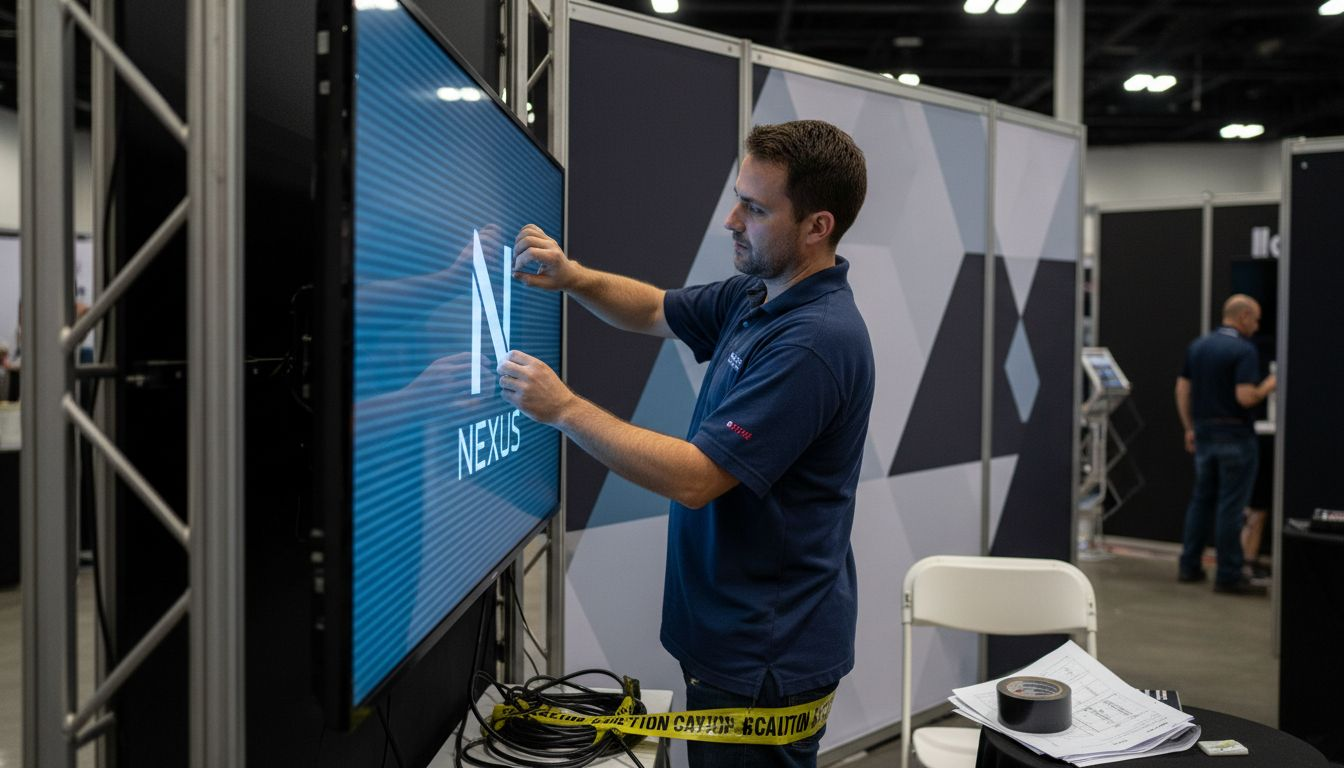
The practical reality for your booth planning comes down to matching technology to function. If you’re launching a new product and need visitors to examine fine details, fine-pixel-pitch LED or OLED creates that premium, immersive experience. For general brand messaging and eye-catching visual impact across a large booth floor space, standard LED walls deliver excellent results without the premium price tag. Consider your exhibition timeline too: if this is a one-time trade show appearance, rental options for these technologies make financial sense, while permanent showroom installations justify higher upfront investment in superior technologies. Think about your booth’s viewing distances, the specific information you’re displaying, and your power availability—these practical factors often matter more than having the latest technology.
Here’s a comparison of popular exhibition display technologies and their optimal usage scenarios:
| Technology Type | Best Use Case | Key Strength | Limitation |
|---|---|---|---|
| LED Wall | Large booths, brand impact | High brightness, flexible size | May consume more power |
| Fine-pixel LED | Product detail, close viewing | Crisp visuals, premium feel | Higher cost, delicate setup |
| OLED | Luxury product showcase | Deep contrast, vibrant colors | Fragile, expensive |
| LCD | Small to medium info displays | Affordable, sharp resolution | Limited viewing angles |
| AR/VR | Personalized demos, facility tours | Immersive, interactive experiences | Needs staff guidance, some visitor hesitation |
Pro tip: Request detailed specifications on pixel pitch, brightness levels (measured in nits), and power consumption before selecting your display technology, then simulate how your specific booth layout and booth traffic patterns will interact with that technology during peak exhibition hours.
Features That Drive Attendee Engagement
Here’s what research consistently shows: attendees don’t remember your booth because of impressive displays alone. They remember it because something made them stop, interact, and feel connected to your brand. The features that actually drive engagement at modern exhibitions combine three core elements: personal interaction with knowledgeable booth staff, hands-on product demonstrations, and purposefully designed learning environments that make visitors feel they’ve gained genuine value. Digital displays play a supporting role, but the real magic happens when technology removes friction from human connection rather than replacing it. This distinction matters enormously for how you should invest your exhibition budget.
The most effective booths structure their space around specific interaction opportunities. Interactive product demonstrations let visitors touch, test, and understand your solutions firsthand, which builds confidence far better than any video could. When your booth staff engage visitors in peer networking conversations or facilitate connections between attendees with complementary interests, you’re creating emotional investments in your brand. Layering in timely follow-up strategies both before and after the exhibition extends engagement beyond the trade show floor itself. Consider adding multiple activation options within your booth space—some visitors want deep technical conversations with specialists, others prefer casual product exploration, and still others are there primarily to network. When your booth design accommodates these different engagement styles simultaneously, you capture attendees regardless of their specific mindset that day. Research indicates that interactive and innovative booth features significantly enhance how visitors experience and remember your presence.
What separates average booths from ones that drive real business results is intentional experience design combined with staff preparation. Your display technology should highlight what makes interaction possible, not distract from it. A beautifully designed interactive station means nothing if your staff isn’t trained to recognize when a visitor is ready for engagement or how to smoothly transition from casual observation into meaningful conversation. The booth layout itself sends messages—open, accessible designs invite exploration while cluttered spaces create barriers. Before selecting specific display features, ask yourself what action you want attendees to take after leaving your booth: download resources, schedule a follow-up meeting, refer you to colleagues, or advocate for your brand. Then build backward from that outcome to determine which features genuinely serve that purpose.
Pro tip: Train your booth staff to use displays as conversation starters rather than information dumps, and monitor which demonstrations and interaction points generate the longest dwell times and most qualified conversations throughout the exhibition.
Integration Trends Shaping Exhibit Designs
The way companies are designing exhibition booths has fundamentally changed. Gone are the days when a static booth meant a printed banner, some product samples, and a table for business cards. Today’s most effective booth designs blend physical spaces with digital experiences, creating what researchers call immersive hybrid environments where visitors seamlessly move between tangible interactions and virtual exploration. This shift reflects a critical realization: the most memorable exhibitions don’t choose between digital or physical—they strategically integrate both. For European marketing managers, understanding these integration trends is essential because they directly influence how you’ll allocate your exhibition budget and what ROI you can realistically expect.
Three major integration trends are reshaping how booths are conceptualized. First, immersive technologies like virtual reality and augmented reality are moving beyond novelty status into practical booth functions. Instead of simply showing a product video, progressive companies now let visitors place your product into their own environment using AR, or walk through a virtual facility tour using VR headsets. Second, data-driven personalization is becoming standard. Your booth displays can now adapt content based on visitor behavior, showing different product information to technical buyers versus decision-makers, creating tailored narratives that resonate with each attendee’s specific interests. Third, sustainability-focused integration is reshaping material choices and booth construction itself. Rather than building disposable booths for single-use events, smart companies now invest in modular, reusable booth systems that reduce waste while maintaining visual impact—and visitors increasingly notice and appreciate this environmental responsibility. These three trends often work together: a modular booth structure might feature interactive touchscreens that deliver personalized content, supported by AR visualization capabilities that let prospects explore customization options.
The practical implication is that booth design must now accommodate continuous adaptation rather than static presentation. Your booth layout should allow for different display configurations depending on exhibition goals, visitor flows, and emerging technologies you might want to test. Physical space planning now requires considering power infrastructure for digital displays, network connectivity for interactive features, and staff training on technology that goes beyond simple product explanation. When researching booth design partners, look for providers who understand how personalized booth design creates competitive advantage while maintaining operational flexibility. This approach transforms your booth from a one-time investment into a strategic asset that evolves with your business needs and visitor expectations.
Pro tip: Build your booth design around modular, reusable components from the start, then layer in technology and personalization elements strategically rather than attempting complete redesigns for each exhibition.
Cost Factors and Sustainability in Display Selection
When evaluating display technology for your exhibition booth, you’re likely facing a familiar tension: the most visually impressive solutions often come with premium price tags. But here’s what changes the equation: sustainable display options, while sometimes requiring higher upfront investment, actually deliver better long-term financial performance than cheaper alternatives. This isn’t marketing rhetoric—it’s supported by lifecycle cost analysis that examines total expenditure across multiple exhibitions rather than single-event budgets. For European companies managing exhibition programs across multiple trade shows annually, understanding this economic reality fundamentally shifts your purchasing decisions. The brands winning in competitive exhibitions aren’t necessarily those spending the most on each booth; they’re the ones optimizing their cost-to-impact ratio across their entire exhibition portfolio.
The upfront cost difference between standard and sustainable display solutions typically ranges from 15 to 30 percent higher for eco-friendly options, but the actual ROI calculation looks dramatically different when you account for what happens next. Standard displays often require complete replacement or expensive refresh cycles between exhibitions because materials degrade, technology becomes obsolete, or booth structures sustain damage. Sustainable displays—built from recyclable, reusable, and durable materials—maintain functionality and visual appeal across 5 to 8 exhibition cycles without major replacement costs. Beyond material durability, sustainable approaches generate measurable brand value: consumer preference for environmentally responsible companies translates into increased booth traffic, higher quality lead generation, and strengthened brand trust. Additionally, compliance savings matter significantly in European markets, where environmental regulations and green procurement standards increasingly influence which suppliers you can work with and what certifications your exhibitions need. When you factor in waste reduction costs, compliance alignment, and brand reputation benefits alongside material longevity, sustainable displays demonstrate superior financial performance over a 3 to 5 year period.
Your display technology selection should account for specific cost factors that directly impact your exhibition outcomes. Consider power consumption: energy-efficient LED displays reduce operational costs during multi-day exhibitions, especially when running continuously across large booth footprints. Modularity affects both initial investment and adaptation costs—systems designed for reconfiguration eliminate the need for complete rebuilds when exhibition space, visitor flows, or brand messaging evolve. Rental versus purchase decisions depend on your exhibition frequency and long-term strategy, but sustainable exhibition stand designs increasingly favor modular rental programs over disposable booths because they align cost management with environmental responsibility. Labor costs associated with installation, technology management, and breakdown also factor into total cost of ownership—complex displays requiring specialized technicians on-site generate hidden expenses that simpler systems eliminate. The critical insight is this: evaluating display selection requires lifecycle thinking rather than single-transaction pricing.
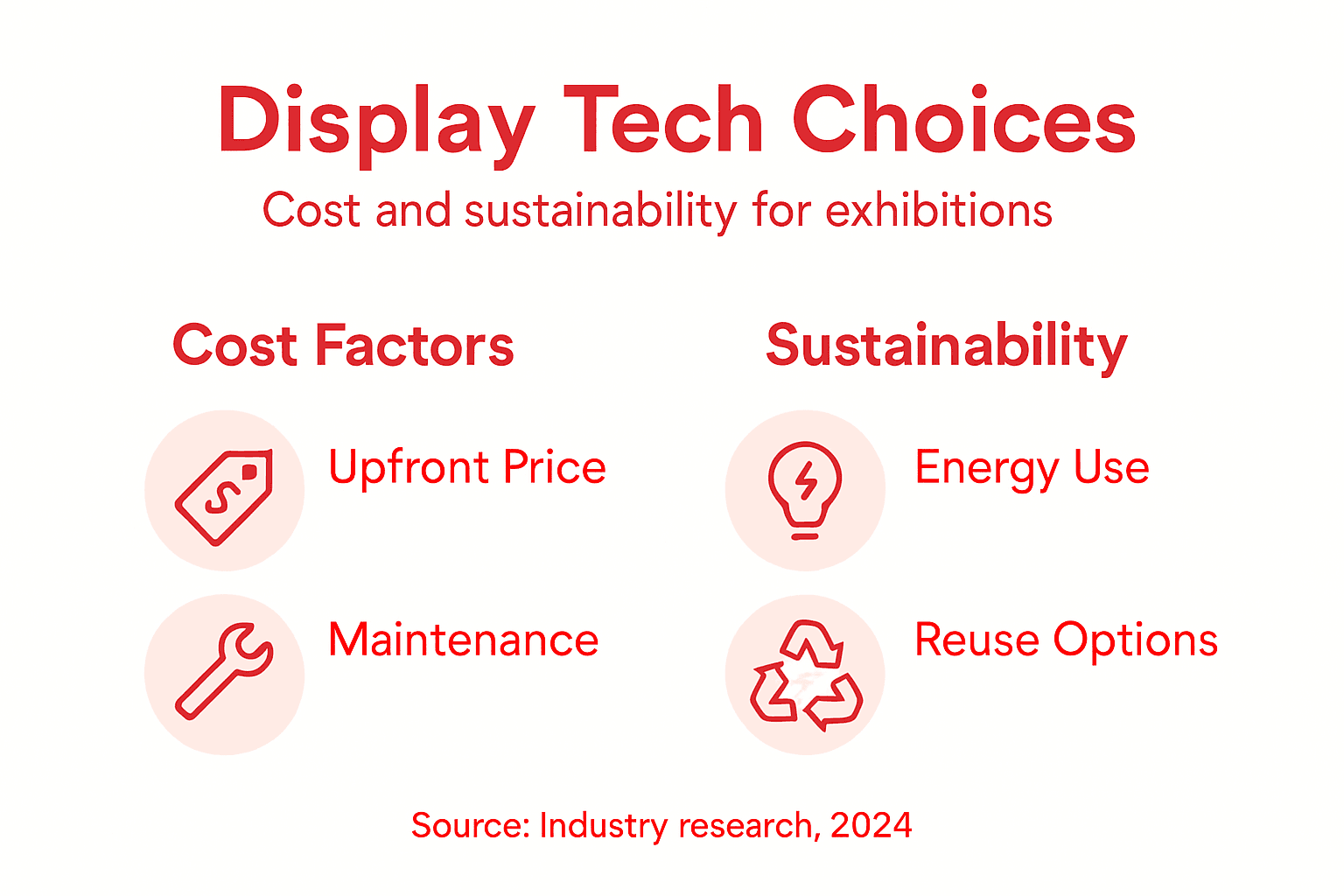
This table summarizes the main cost and sustainability factors to consider when selecting exhibition display technologies:
| Factor | Standard Displays | Sustainable Displays | Financial Impact |
|---|---|---|---|
| Upfront Cost | Lower initial price | 15-30% higher investment | Sustainable wins over long term |
| Lifespan | 1-2 exhibition cycles | 5-8 exhibition cycles | Reduces replacement expense |
| Waste Generation | Higher, often single-use | Reusable, less waste | Saves on disposal fees |
| Compliance | May lack certifications | Meets green standards | Avoids penalty costs |
| Brand Impact | Neutral or unnoticed | Boosts eco reputation | Drives attendee preference |
Pro tip: Request a three-year total cost of ownership comparison from your display technology provider, including upfront costs, maintenance expenses, power consumption, replacement frequency, and waste management fees rather than making decisions based solely on initial purchase price.
Common Mistakes to Avoid in Exhibit Technology
Most marketing managers planning their first major exhibition technology investment make at least one critical error that costs them thousands of euros in wasted budget and diminished ROI. The pattern is predictable: companies get seduced by cutting-edge technology, invest heavily in impressive displays, then watch those displays sit idle because they didn’t plan for the practical realities of exhibition environments. Understanding what actually goes wrong helps you avoid these traps. The mistakes fall into three categories: over-specification without purpose, underestimating technical requirements, and neglecting the human element. Each one sabotages your exhibition results differently, but all share a common root cause—technology decisions made without connecting them directly to your actual business outcomes.
The first category of mistakes involves choosing technology for its novelty rather than its function. You see a stunning VR installation at a competitor’s booth, so you assume you need VR too. But if your target audience isn’t actually exploring product configurations in 3D space, or if they’re hesitant about unfamiliar technology, that expensive VR setup becomes a booth traffic blocker rather than an engagement driver. Similarly, companies often purchase displays with specifications far exceeding their actual needs—ultra-high resolution screens in environments where standard resolution displays would perform identically, or LED walls so massive they overwhelm booth visitors rather than drawing them in strategically. The second category involves technical underpreparation that creates on-site failures. Booth managers arrive to discover insufficient power infrastructure, inadequate network connectivity, or display equipment that doesn’t interface with their content management systems. These aren’t small inconveniences—they directly compromise your exhibition performance during critical event days when fixing them becomes expensive and time-consuming. The third category, often overlooked, is failing to account for the human complexity of operating technology during live exhibitions. Your beautiful interactive display becomes useless if your booth staff aren’t trained to troubleshoot basic issues, reset systems when they freeze, or explain features to different visitor types. Many companies invest 80 percent of their budget in hardware and only 20 percent in staff preparation, but the opposite ratio actually delivers better results.
When planning your display technology strategy, approach it with the discipline used for effective booth design fundamentals. Start by defining your core visitor action before selecting technology—what do you need visitors to do differently because of this display? Only then evaluate which technologies actually serve that purpose. Test your technology assumptions with smaller exhibitions before committing to expensive installations at major trade shows. Build contingency time into your setup schedule specifically for technology troubleshooting, knowing that something will require adjustment once you’re on-site. Most importantly, allocate adequate resources to staff training on your technology at least two weeks before the exhibition, then conduct daily technology briefings during the event to address issues staff encounters. The companies that get the strongest returns from exhibit technology aren’t those with the most sophisticated systems—they’re the ones who matched technology deliberately to strategy and prepared their teams thoroughly for execution.
Pro tip: Create a technology backup plan for every critical function before you arrive at the exhibition, including device replacement specifications, network troubleshooting contacts, and manual alternatives if systems fail during peak traffic hours.
Elevate Your Exhibition Impact with Expert Display Technology Solutions
The challenge highlighted in the article shows how selecting the right display technology and integrating it effectively with your booth design is critical to capturing attention and creating meaningful attendee engagement. You want to avoid costly mistakes like over-specifying technology or under-preparing your staff while ensuring your investment supports your core exhibition goals such as lead generation or brand education. At Adam Expo Stand, we understand these pain points and specialize in crafting personalized exhibition solutions that combine the latest display options with thoughtful booth design and strategic experience planning.
By partnering with us, you gain access to comprehensive services including custom and modular booth fabrication that optimize the use of LED, OLED, interactive displays, and AR capabilities tailored to your visitor interaction objectives. Our team focuses on delivering reusable and sustainable stand designs that enhance your brand’s visual impact while respecting your budget and environmental commitments. We support you with 3D design visualizations, on-site assembly, and expert project management to ensure flawless execution from concept to show floor.
Ready to transform your trade show presence with display technology solutions that truly engage and convert attendees Visit Adam Expo Stand today and explore how our custom exhibition stand design and sustainable modular booth options can help you create an immersive experience that sets your brand apart Act now to secure your personalized consultation and start maximizing the return on your next exhibition investment
Frequently Asked Questions
What are the main types of display technologies used in exhibitions?
The main types of display technologies used in exhibitions include LED displays, fine-pixel LED screens, OLED displays, LCDs, and immersive technologies like augmented reality (AR) and virtual reality (VR). Each type serves different purposes depending on the booth’s objectives.
How does integrating display technology enhance attendee engagement at exhibitions?
Integrating display technology enhances engagement by creating immersive experiences that encourage interaction. Features like hands-on product demonstrations and personalized content make attendees feel connected to the brand, significantly improving brand recall and emotional connection.
What factors should be considered when choosing display technology for an exhibition booth?
When choosing display technology, consider factors like your exhibition goals, viewing distances, energy consumption, and the layout of your booth. It’s important to match the technology to its intended function and to think about the visitor experience throughout the event.
How can sustainable display options impact long-term exhibition costs?
Sustainable display options, while typically more expensive upfront, often last longer than standard options, reducing replacement costs over time. They also tend to enhance brand reputation and align with growing consumer preference for environmentally responsible companies.