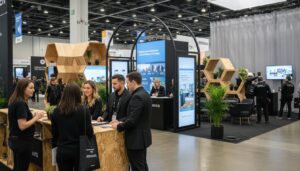
Think you need a massive booth to make a statement at European trade shows? Think again. Some of the most memorable moments happen in the smallest spaces. A compact stand isn’t a setback, it’s your secret weapon for creating powerful, focused experiences that attract high quality leads.
This guide is packed with brilliant small exhibition booth ideas to help you stand out. We will explore creative booth designs that maximize every inch, engage visitors, and make a huge impact without a huge budget. Whether you’re exhibiting in Berlin, Paris, or Milan, get ready to prove that amazing things truly come in small packages. Let’s transform your booth from overlooked to overbooked.
Understanding the European Trade Show Landscape
Exhibiting in Europe is a bit like attending a grand dinner party where every guest speaks a different language but shares a love for impeccable style. It’s not just about showing up; it’s about fitting in while standing out. To succeed here, you need to grasp the vibe of the continent, which prizes quality, innovation, and genuine connection over flashy, aggressive sales tactics.
Key Trends in European Exhibition Booth Design
Right now, the European market is leaning heavily into smarter, not harder, design choices. One major movement is the rise of modular exhibition stands. These clever, flexible structures allow you to adapt your booth to different venues, whether you’re in a tight corner in Munich or an open hall in Milan, without reinventing the wheel every time.
Another massive trend is the shift toward sustainable exhibition stands. In Europe, going green isn’t just a nice to have; it’s expected. Exhibitors are swapping out single use plastics for recycled wood, energy efficient LED lighting, and reusable fabrics. It’s a way to show you care about the planet while keeping your setup looking sleek and modern.
What Makes European Trade Shows Unique?
The diversity across the continent is staggering. A show in Northern Europe might favor minimalism, efficiency, and direct business talks, while an event in Southern Europe could be more about relationship building over espresso and vibrant, emotional storytelling.
European trade shows also tend to have a higher standard for hospitality. It’s common to see booths offering high quality coffee or snacks to keep visitors comfortable. Understanding these nuances, from exhibition booth design preferences to cultural etiquette, is the secret sauce to making your small booth feel like a local favorite, no matter where you set up shop.
Planning Your Small Exhibition Booth
Before you start picking out furniture or designing flashy graphics, you need a solid game plan. Planning a small booth is a bit like packing a carry on suitcase for a long trip: you have limited space, so everything you bring must have a clear purpose. There is no room for “maybe” items here.
What Are the Essential Elements of a Successful Booth?
A great small exhibition booth isn’t just about looking pretty; it has to work hard for you. First, focus on a clear focal point. Since you don’t have acres of space, you can’t clutter the area with ten different messages. Pick one hero product or key service and build your entire exhibition booth design around it.
Next, think about flow. Even in a 9 or 12 square meter space, people need to move comfortably. Avoid blocking the entrance with tables. Instead, keep the front open and inviting. Branding is also non negotiable. Your logo should be visible from the aisle, placed high enough so it isn’t blocked by people standing in front of it. Finally, lighting is your secret weapon. A well lit back wall can make a tiny space feel twice as big and infinitely more professional.
Choosing the Right Booth Size for Your Goals
Bigger isn’t always better, especially at European trade shows where floor space comes at a premium. The right size depends entirely on what you want to achieve. If your goal is deep, intimate conversations with qualified leads, a smaller, cozy footprint often works better than a massive, impersonal hall. It forces engagement.
However, if you need to demonstrate large machinery or physical products, you might need to prioritize floor space over meeting areas. Be realistic about your budget, too. A smaller space allows you to spend more on high quality finishes and technology, which often leaves a stronger impression than a large, empty shell. Remember, a packed small booth always looks more successful than an empty large one.
Design Strategies for Small Booths
When you’re working with a compact footprint, design isn’t just about decoration; it’s about problem solving. The goal is to make your 9 or 12 square meter space feel like a destination, not an afterthought. With the right strategies, you can turn limitations into advantages.
Optimizing Space: Vertical and Modular Solutions
If you can’t build out, build up. One of the most effective ways to maximize a small exhibition booth is to use vertical space. High level branding, such as hanging banners or tall back walls, draws the eye upward and makes your booth visible from across the hall. It creates an illusion of height and grandeur, ensuring you don’t get lost among the giants.
This is where modular exhibition stands truly shine. These systems are like adult building blocks, flexible, reusable, and incredibly smart. You can configure them to fit awkward corners or tight spaces perfectly. Because they are often lightweight and easy to transport, they are ideal for the European circuit, allowing you to adapt your setup from a show in Paris to one in Berlin without needing a completely new build every time.
The Role of High Impact Graphics in Small Spaces
In a small space, every surface has to work double duty. You don’t have the luxury of blank walls. This is why high impact graphics are your best friend. Instead of cluttering your walls with paragraphs of text that no one will read, use bold, vibrant imagery that communicates your message instantly.
Think of your back wall as a billboard. Use high resolution images and punchy, concise headlines. Lighting plays a huge role here, too. Backlit graphics or lightboxes can make your visuals pop, creating a warm and inviting glow that draws visitors in like moths to a flame. Remember, clarity is king, a clean, bold design will always outperform a busy, cluttered one.
Engaging Visitors at Your Booth
You’ve built a stunning stand, but a pretty design alone won’t fill your sales pipeline. In the busy aisles of European trade shows, you need to give people a reason to stop walking and start talking. Engagement is the heartbeat of any successful exhibition, and in a small exhibition booth, it’s even more critical because you can’t rely on sheer size to grab attention.
What Are the Best Ways to Attract Visitors?
Start by sparking curiosity. Interactive elements are fantastic icebreakers. You don’t need a massive setup; a simple tablet station running a quick quiz or a product demo can work wonders. People love to touch, play, and test things. If you can gamify your experience, perhaps a contest with a leaderboard, you tap into people’s competitive nature.
Giveaways also work, but be smart about them. Instead of cheap plastic pens that end up in the bin, offer something useful or delicious. In Europe, quality matters. A high quality tote bag or a branded power bank is far more likely to be kept and used, keeping your brand in their hands long after the show ends. These strategies drive visitor engagement without requiring a massive footprint.
Creating a Comfortable and Inviting Environment
Trade shows are exhausting. Attendees walk miles on hard concrete floors. Use this to your advantage by making your booth a mini oasis. Offering a comfortable chair or a place to charge a phone can be the most valuable thing on the show floor.
Hospitality is huge in Europe. Offering a fresh espresso or a cold bottle of water is a classic, effective move. It encourages visitors to linger, giving your team a natural opening to start a conversation. When your booth feels welcoming rather than aggressive, visitors relax, and that is when real business relationships begin.
Sustainability in Booth Design
In Europe, sustainability isn’t just a buzzword; it’s a business requirement. Walking through European trade shows today, you’ll notice a distinct shift. The days of disposable, single use builds are fading fast. Exhibitors and attendees alike are prioritizing brands that care about their environmental footprint. The good news? Going green doesn’t mean your booth has to look boring or “rustic.”
Eco Friendly Materials and Practices
Creating sustainable exhibition stands starts with what you build with. Forget about heavy plastics and non recyclable vinyls. Instead, look for lightweight, renewable resources like FSC certified wood, recycled aluminum frames, or fabric graphics printed with water based inks.
It’s also about the lifecycle of your booth. Modular systems are fantastic here because they are designed to be reused again and again. You can reconfigure the same kit for five different shows, drastically reducing waste compared to a “build and burn” custom stand. Even small changes, like using energy efficient LED lights instead of power hungry halogens, make a measurable difference.
How Can You Make Your Booth Sustainable Without Sacrificing Design?
A common myth is that eco friendly means compromising on style. That couldn’t be further from the truth. In fact, sustainable design often looks cleaner and more modern. You can achieve a high end, polished look using eco friendly materials like recycled cardboard furniture that is surprisingly sturdy and chic or flooring made from recycled rubber or bamboo.
The key is intentionality. A minimalist design that uses fewer materials but high quality finishes often looks far more sophisticated than a cluttered, resource heavy booth. By choosing reusable elements and smart design, you prove that your brand is forward thinking and responsible, qualities that resonate deeply with European audiences.
Leveraging Technology for Maximum Impact
Technology is a fantastic way to punch above your weight in a small booth. It lets you show off a huge product range without needing physical samples, tell complex stories in an engaging way, and capture valuable information without a single clipboard. Used correctly, it can transform your small stand into a high tech hub of activity.
Digital Displays and Data Collection
Instead of static posters, think about using digital screens. A large TV or a set of tablets can cycle through product videos, customer testimonials, or interactive presentations. This keeps your content fresh and dynamic, giving visitors a reason to stop and watch. It also saves space, as one screen can do the job of ten printed boards.
Technology also makes data collection a breeze. Forget manually scribbling down names and email addresses. You can use a tablet with a simple form or a QR code that links to a sign up page. This is not only more efficient but also signals to attendees at European trade shows that your brand is modern and tech savvy. Plus, it improves visitor engagement by making the process quick and painless.
Social Media Integration: Boosting Engagement Beyond the Event
Your small exhibition booth exists in the physical world, but its reach can extend far into the digital one. Social media is your megaphone. Encourage visitors to take photos at your booth, perhaps in front of a cool graphic wall or with a fun prop, and share them using a specific event hashtag. You could even run a contest for the best photo.
This strategy does two things: it creates a buzz around your physical location at the show, and it broadcasts your brand to a much wider audience online. It’s a low cost, high impact way to amplify your presence and ensure the conversations started at your booth continue long after the event has ended.
Practical Tips for European Trade Shows
Exhibiting in Europe is an exciting opportunity, but it comes with its own set of rules. A little bit of planning can save you a lot of headaches, ensuring your experience is smooth and successful from start to finish. Knowing what to expect before you land will help you focus on what really matters: connecting with your audience.
Navigating Local Regulations and Compliance
Each country, and sometimes even each venue, has its own specific regulations for European trade shows. These can cover everything from fire safety standards for materials to height restrictions for your booth. For example, some venues in Germany are very strict about the types of fabrics you can use, requiring specific fire retardant certificates.
Ignoring these rules can lead to costly last minute changes or, in worst case scenarios, being told you can’t build your stand. Before you finalize your small exhibition booth design, it’s crucial to get a copy of the event’s technical manual and read it carefully. Working with a local partner who understands these nuances is a huge advantage, as they can ensure your design is fully compliant from day one.
Logistics and On Site Support: What to Expect
Getting your booth materials to the venue on time can be complex, involving shipping, customs, and drayage (the process of moving your freight from the loading dock to your booth space). This is where reliable on site support becomes invaluable.
Having a team on the ground to manage the installation and dismantling of your booth is a game changer. They handle the heavy lifting, coordinate with venue staff, and solve any unexpected problems that pop up. This frees you up to prepare for the show, network with other exhibitors, and rest before the doors open. A smooth setup process sets a positive tone for the entire event, letting you walk into your perfectly assembled booth feeling confident and ready to go.
Conclusion
Wrapping your head around exhibiting in Europe might feel daunting, especially when you are working with limited square footage. But as we have explored, a small exhibition booth is not a disadvantage, it’s a focused, potent opportunity to connect deeply with your audience. You don’t need the biggest footprint to leave the biggest mark; you just need the smartest strategy.