Complete Guide to Booth Fabrication for Exhibitors
Over half of american exhibitors say that booth design directly impacts their trade show success. Custom booths have become more than simple backdrops—they work as dynamic spaces that shape brand perception and drive visitor engagement. Understanding the fundamentals of booth fabrication empowers companies to create standout experiences, whether you represent a new startup or an established american business looking to make a lasting impression.
Table of Contents
- Booth Fabrication Defined And Core Concepts
- Common Types Of Trade Show Booths
- Key Steps In The Fabrication Process
- Essential Features And Customization Options
- Cost, Timeline, And Sustainability Considerations
Key Takeaways
| Point | Details |
|---|---|
| Booth Fabrication Essentials | Involves designing and constructing immersive spaces that effectively showcase brands at trade shows. |
| Types of Booths | Different configurations, such as inline, corner, peninsula, and island booths, cater to various marketing strategies and objectives. |
| Fabrication Process Steps | The process includes conceptual design, technical planning, prototype development, manufacturing, logistics, and on-site installation. |
| Customization and Sustainability | Successful booths blend unique structural designs with technology while considering budget and environmental impact through reusable and recyclable materials. |
Booth Fabrication Defined and Core Concepts
Booth fabrication represents the strategic process of designing, constructing, and assembling custom exhibition spaces that transform raw architectural concepts into immersive brand experiences. At its core, booth fabrication is a sophisticated blend of creative design, precise engineering, and strategic marketing that enables businesses to showcase their products and brand identity within trade show environments. Discover the complete guide to exhibition stand fabrication to understand how these remarkable spaces come to life.
The fundamental objective of booth fabrication goes beyond mere physical construction. Professional exhibition designers meticulously craft these spaces to communicate complex brand narratives, attract potential clients, and create memorable visual experiences. Their work involves translating abstract marketing strategies into tangible, three-dimensional environments that capture audience attention within competitive trade show landscapes. Key components of this process include:
- Conceptual sketching and design planning
- Computer-generated 3D visualization
- Material selection and structural engineering
- Branding integration
- Logistical considerations for transportation and assembly
Successful booth fabrication requires a multidisciplinary approach that blends artistic creativity with technical precision. Exhibition designers must understand architectural principles, marketing psychology, brand communication strategies, and practical engineering constraints. Explore different trade show booth types to appreciate the nuanced approaches professionals use when creating these dynamic spaces. Whether designing a compact modular stand or an expansive custom installation, the goal remains consistent: creating an impactful, functional environment that effectively represents a company’s professional identity and marketing objectives.
Common Types of Trade Show Booths
Trade show booths come in several strategic configurations designed to maximize brand visibility, engagement, and spatial efficiency. Understanding these different booth types allows exhibitors to select the most appropriate layout for their specific marketing objectives and event constraints. Explore the nuanced world of exhibition stand designs to make an informed choice that aligns with your brand’s presentation goals.
The four primary booth types represent distinct spatial and marketing strategies:
- Inline Booth: The most standard configuration, typically arranged in a linear row with booths sharing side walls. These booths have only one open side facing the aisle, making them ideal for smaller budgets and more compact presentations.
- Corner Booth: Positioned at the intersection of two aisles, corner booths offer enhanced visibility with two open sides, providing more opportunities for attendee interaction and traffic flow.
- Peninsula Booth: An expansive option featuring three open sides, allowing maximum exposure and creating a more immersive brand environment. These booths are excellent for companies wanting to make a significant visual impact.
- Island Booth: The most premium configuration with all four sides exposed, offering unparalleled visibility and space for complex, interactive displays. Island booths provide the ultimate canvas for creative and comprehensive brand storytelling.
Choosing the right booth type requires careful consideration of factors like exhibition space, budget, marketing objectives, product display requirements, and expected attendee traffic. Discover creative strategies for booth design that can transform these spatial configurations into powerful marketing tools. Each booth type presents unique advantages, and the most successful exhibitors strategically align their booth selection with their specific communication and engagement goals.
Key Steps in the Fabrication Process
Booth fabrication is a complex, multistage process that transforms initial design concepts into fully realized exhibition environments. Discover the comprehensive approach to modular trade show stand construction to understand how professional designers translate creative vision into functional marketing spaces. This intricate journey involves several critical phases that require precision, creativity, and strategic planning.
The fabrication process typically unfolds through six key stages:
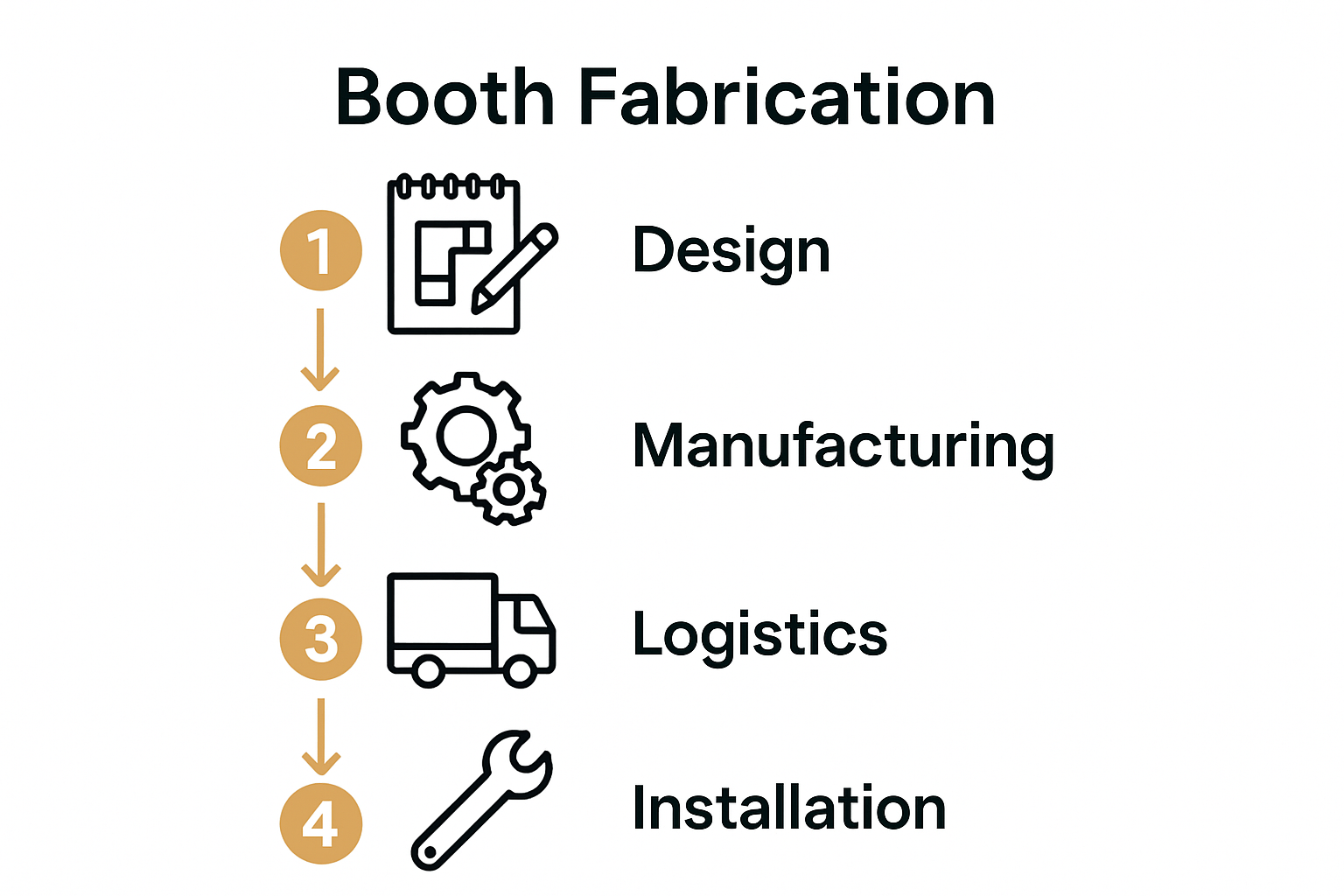
- Conceptual Design: Exhibition designers begin by developing initial sketches and digital renderings that capture the brand’s marketing objectives. This stage involves:
- Collaborative client consultations
- Preliminary design concept development
- 3D visualization techniques
- Initial budget and feasibility assessment
- Technical Planning: Detailed technical specifications are created, including:
- Precise architectural drawings
- Material selection and engineering specifications
- Structural calculations
- Electrical and technological integration plans
- Prototype Development: A scaled model or digital prototype is constructed to validate design concepts, allowing for:
- Structural integrity testing
- Design refinement
- Client review and approval
- Identification of potential manufacturing challenges
- Manufacturing: The actual physical construction phase involves:
- Precision cutting and fabrication of structural components
- Custom branding and graphics production
- Material assembly
- Quality control checks
- Transportation and Logistics: Careful planning ensures safe and efficient booth transportation, including:
- Modular design for easy disassembly
- Custom shipping and protective packaging
- Coordination with event logistics teams
- Efficient loading and transportation strategies
- On-Site Installation: The final stage involves expert assembly and setup, focusing on:
- Precise booth reconstruction
- Final aesthetic and structural adjustments
- Technical systems integration
- Preparation for exhibition launch
Learn more about creative trade show strategies that can elevate your exhibition presence. Each step in the fabrication process requires meticulous attention to detail, combining technical expertise with creative vision to create compelling brand experiences that captivate and engage potential clients.
Essential Features and Customization Options
Customization transforms trade show booths from generic spaces into powerful brand storytelling platforms, enabling exhibitors to create unique, memorable experiences that differentiate them from competitors. Explore innovative exhibition stand design strategies to understand how strategic customization can elevate your brand’s visual communication and audience engagement.
Essential customization features can be categorized into several key areas:
Structural Customization
- Modular Framework: Flexible design allowing reconfiguration for different event spaces
- Height Variations: Adjustable booth heights to maximize visual impact
- Custom Geometric Shapes: Non-traditional booth layouts that break standard rectangular designs
Technological Integration
- Interactive digital displays
- Touchscreen product demonstration stations
- Integrated charging stations
- Augmented reality (AR) engagement zones
- LED lighting systems
Branding and Visual Elements
- Custom graphic panels
- Branded flooring solutions
- Unique architectural elements
- Immersive backdrop designs
- Multimedia presentation capabilities
Functional Customization
- Private Meeting Zones: Dedicated spaces for client consultations
- Product Display Mechanisms: Rotating platforms, suspended displays
- Storage Solutions: Integrated, concealed storage for materials
- Climate Control: Localized heating/cooling systems
- Acoustic Treatments: Sound management for presentation areas
Discover creative trade show booth ideas that can transform your exhibition presence. The most successful booth designs seamlessly blend aesthetic appeal, technological innovation, and functional practicality to create compelling brand narratives that resonate with target audiences.
Cost, Timeline, and Sustainability Considerations
Successful booth fabrication requires a strategic approach that balances budgetary constraints, project timelines, and environmental responsibilities. Learn about modular trade show booth solutions that offer flexible, cost-effective, and sustainable options for exhibitors seeking maximum value and minimal environmental impact.
Cost Considerations
Booth fabrication costs can be categorized into several key components:
- Initial Design Costs: – Conceptual design and 3D rendering
- Architectural planning
- Branding integration
- Material Expenses:
- Structural components
- Graphics and visual elements
- Technological integrations
- Additional Budget Factors:
- Transportation logistics
- On-site installation
- Potential rental vs. purchase options
Timeline Management
Typical booth fabrication projects follow a structured timeline:
- Planning Phase: 3-4 weeks
- Initial consultations
- Concept development
- Design approval
- Design and Engineering: 4-6 weeks
- Detailed technical drawings
- Prototype development
- Client revisions
- Manufacturing: 4-6 weeks
- Material procurement
- Fabrication
- Quality control
- Logistics and Preparation: 2-3 weeks
- Transportation planning
- Packaging
- Pre-event testing
Sustainability Strategies
Modern booth fabrication emphasizes environmental responsibility through:
- Reusable Modular Designs
- Recyclable material selection
- Energy-efficient technological components
- Lightweight construction techniques
- Minimal waste production strategies
Discover creative trade show booth ideas that demonstrate how sustainability and innovation can work together. Smart exhibitors recognize that strategic planning, budget optimization, and environmental consciousness are not competing priorities but interconnected elements of successful booth design.
Elevate Your Trade Show Presence with Expert Booth Fabrication Solutions
Navigating the complexities of booth fabrication can feel overwhelming when trying to balance design innovation, tight timelines, and budget constraints. You want a booth that tells your brand story vividly while engaging attendees effectively. At Adam Expo Stand, we understand these challenges and offer personalized solutions that cover everything from conceptual design and 3D visualization to on-site assembly and logistics management. Our turnkey services align perfectly with the core concepts highlighted in the article, ensuring your booth not only looks impressive but also functions seamlessly on the show floor.
Take advantage of our expertise in creating custom and modular stands that are both visually impactful and sustainable. Whether you are considering reusable modular designs or need detailed project management for complex island booths, our team is dedicated to making your vision a reality. To see how we blend creativity with functionality, explore our insights on creative trade show booth ideas and learn about modular trade show booths. Ready to transform your exhibition experience? Visit Adam Expo Stand today and start crafting a booth that captivates your audience and maximizes your event ROI.
Frequently Asked Questions
What is booth fabrication?
Booth fabrication is the process of designing, constructing, and assembling custom exhibition spaces that transform marketing concepts into immersive brand experiences at trade shows.
What are the common types of trade show booths?
The common types of trade show booths include Inline Booths, Corner Booths, Peninsula Booths, and Island Booths, each designed for different visibility and engagement strategies.
What key steps are involved in the booth fabrication process?
The key steps in booth fabrication include conceptual design, technical planning, prototype development, manufacturing, transportation and logistics, and on-site installation.
How can I customize my trade show booth?
Customization options for trade show booths include structural modifications, technological integrations, branding elements, and functional features such as private meeting zones and product display mechanisms.