Key Elements of Effective Booth Design Explained
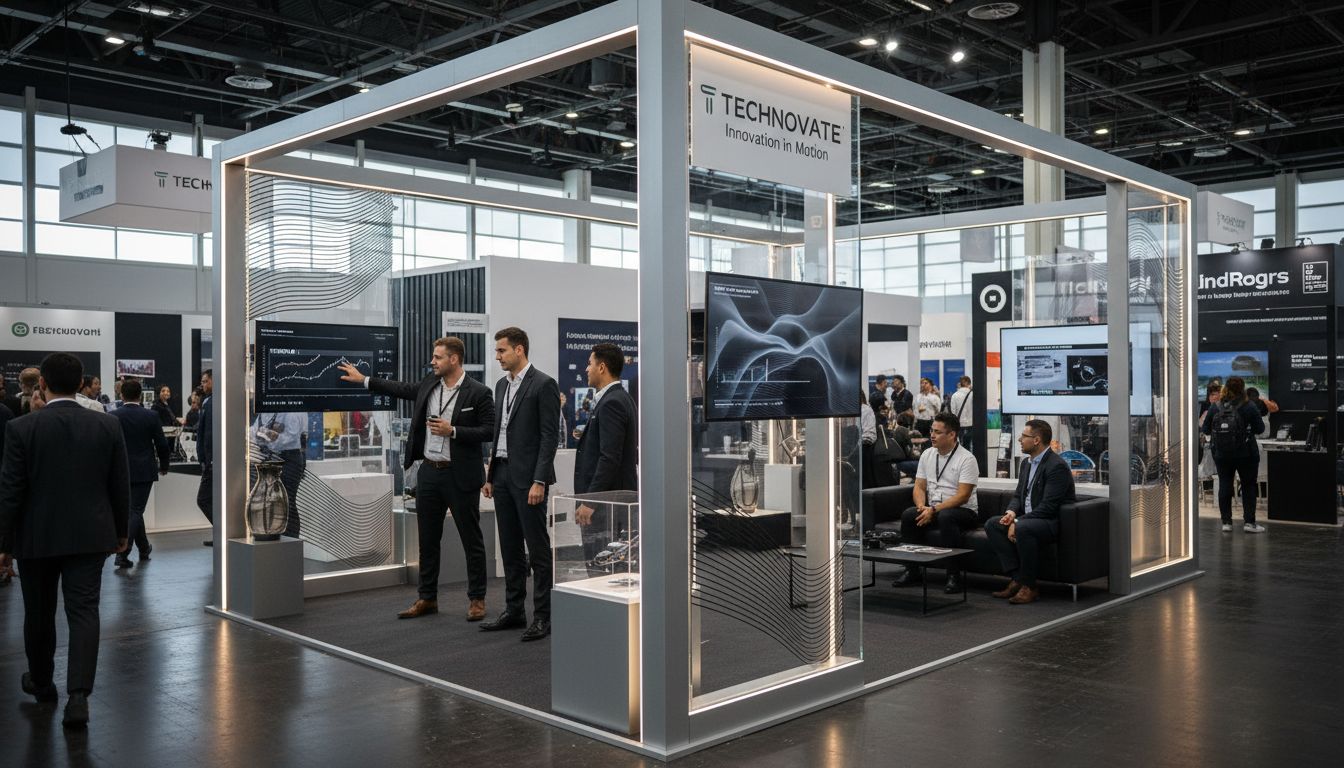
A well-designed trade show booth can increase visitor engagement by over 50 percent, turning a simple display into a memorable brand experience. When every detail counts, getting your booth right means more than just looking good. Smart design choices help you stand out from the competition, attract the right audience, and make your brand message clear. This guide breaks down practical principles and proven strategies that can turn any booth into a powerful marketing tool.
Table of Contents
- Defining Effective Booth Design Principles
- Branding and Visual Communication Essentials
- Layout Planning and Space Optimization
- Interactive Features and Visitor Engagement
- Technology Integration for Modern Booths
- Common Booth Design Mistakes to Avoid
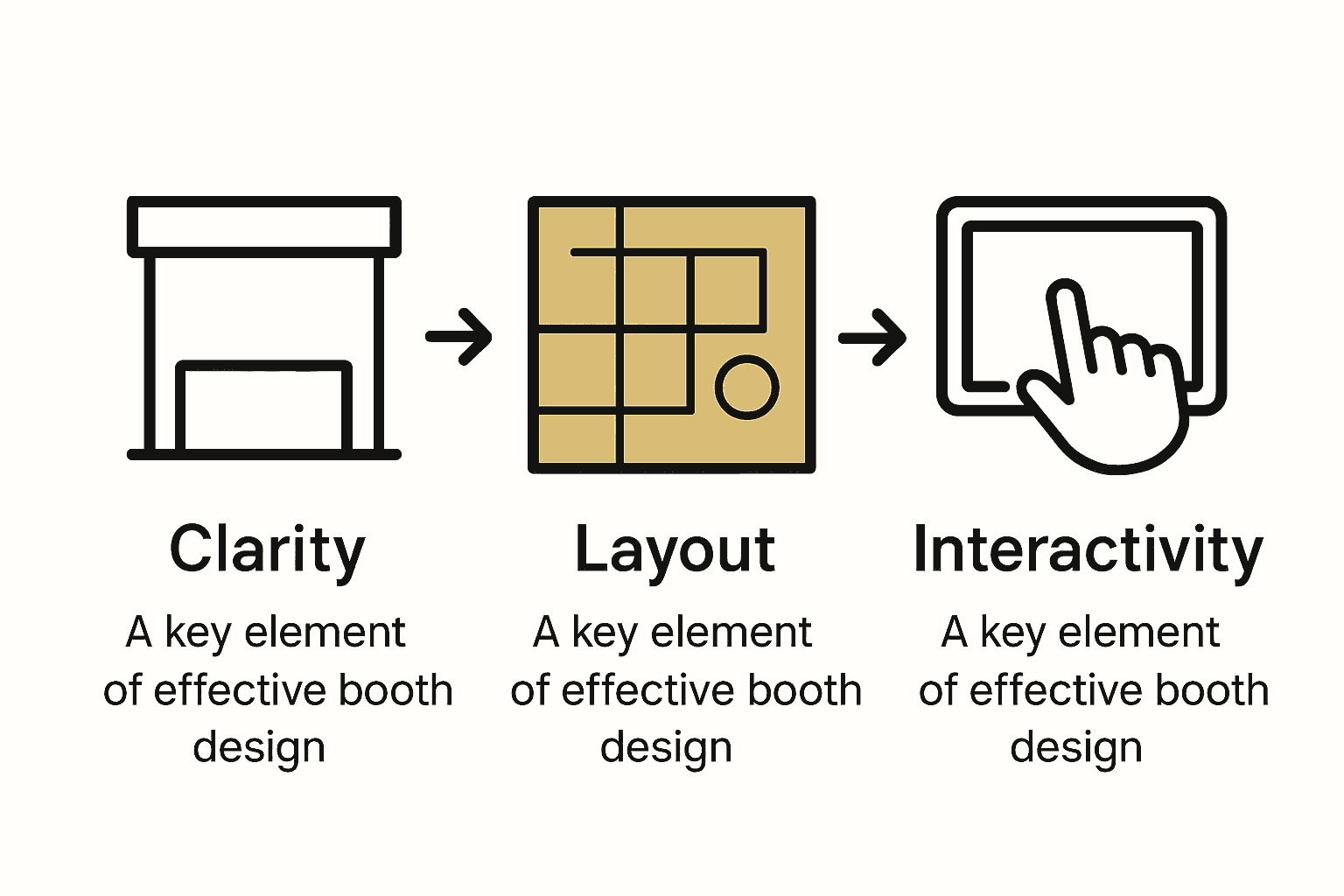
Key Takeaways
| Point | Details |
|---|---|
| Visual Clarity | Prioritize a clean and immediate message using thoughtful design elements to effectively communicate your brand’s value proposition. |
| Strategic Layout | Create a welcoming environment with clear pathways that encourage visitor engagement and exploration while preventing congestion. |
| Interactive Engagement | Implement digital technologies and interactive components that cater to various learning styles, enhancing visitor interactions and creating memorable experiences. |
| Brand Narrative Alignment | Ensure every design element contributes to a cohesive brand story that reflects your values and differentiates you from competitors. |
Defining Effective Booth Design Principles
Booth design represents more than aesthetic appeal – it’s a strategic communication platform that transforms physical space into a powerful brand storytelling environment. Effective booth design requires understanding how visual elements, spatial arrangements, and interactive components collaborate to capture attendee attention and create memorable brand experiences.
At its core, effective booth design prioritizes three fundamental principles: visual clarity, strategic layout, and brand narrative alignment. Visual clarity means creating an immediate, comprehensible message that communicates your brand’s core value proposition within seconds of an attendee’s approach. This involves thoughtful color selection, clean typography, and intuitive graphic hierarchies that guide the viewer’s eye precisely where you want them to look.
The strategic layout transforms your booth from a static display into an engaging interactive space. Consider how traffic flows through your exhibit, creating natural pathways that encourage exploration while preventing congestion. Successful designs incorporate open architecture with strategic sight lines, allowing potential clients to glimpse your offerings without feeling overwhelmed or confined. As our research indicates, digital technologies now play a significant role in creating cohesive visual identities, suggesting that integrating interactive digital elements can dramatically enhance booth engagement.
To truly distinguish your booth, focus on creating a narrative experience that goes beyond mere product display. Creative exhibition booth ideas can transform your space from a simple marketing platform into an immersive brand journey. This means designing not just with aesthetics in mind, but with a clear understanding of how every visual and spatial element contributes to telling your brand’s unique story. Successful booth design isn’t about cramming in information – it’s about crafting an environment that invites curiosity, facilitates meaningful interactions, and leaves a lasting impression on your target audience.
Branding and Visual Communication Essentials
Visual communication is the silent ambassador of your brand, transforming complex messaging into instant, visceral understanding. In the context of trade show booth design, brand communication becomes a nuanced art form that transcends traditional marketing approaches, creating immersive experiences that resonate deeply with potential clients and stakeholders.
At the heart of effective visual communication lies the principle of consistent brand identity. This means developing a holistic visual language that speaks uniformly across every design element – from color palettes and typography to imagery and spatial arrangement. Research indicates that graphic design plays a critical role in building brand recognition, with successful brands creating a visual ecosystem where every element reinforces their core message and values.
Designing a compelling visual communication strategy requires strategic intentionality. Every graphic element should serve a specific purpose: guiding viewer attention, communicating brand personality, and creating emotional connections. Color psychology, for instance, isn’t just about aesthetic appeal – it’s a powerful tool for triggering specific emotional responses. Cool blues might communicate professionalism and trustworthiness, while vibrant oranges can suggest energy and innovation. Exhibition Stand Design Ideas can provide additional inspiration for translating these principles into tangible booth experiences.
Successful visual communication in booth design goes beyond mere decoration – it’s about creating a narrative that unfolds visually. Think of your booth as a three-dimensional storytelling platform where every graphic, every spatial arrangement, and every interactive element contributes to a cohesive brand narrative. The most effective designs don’t just display information; they create immersive experiences that invite engagement, spark curiosity, and leave lasting impressions that extend far beyond the immediate trade show environment.
Layout Planning and Space Optimization
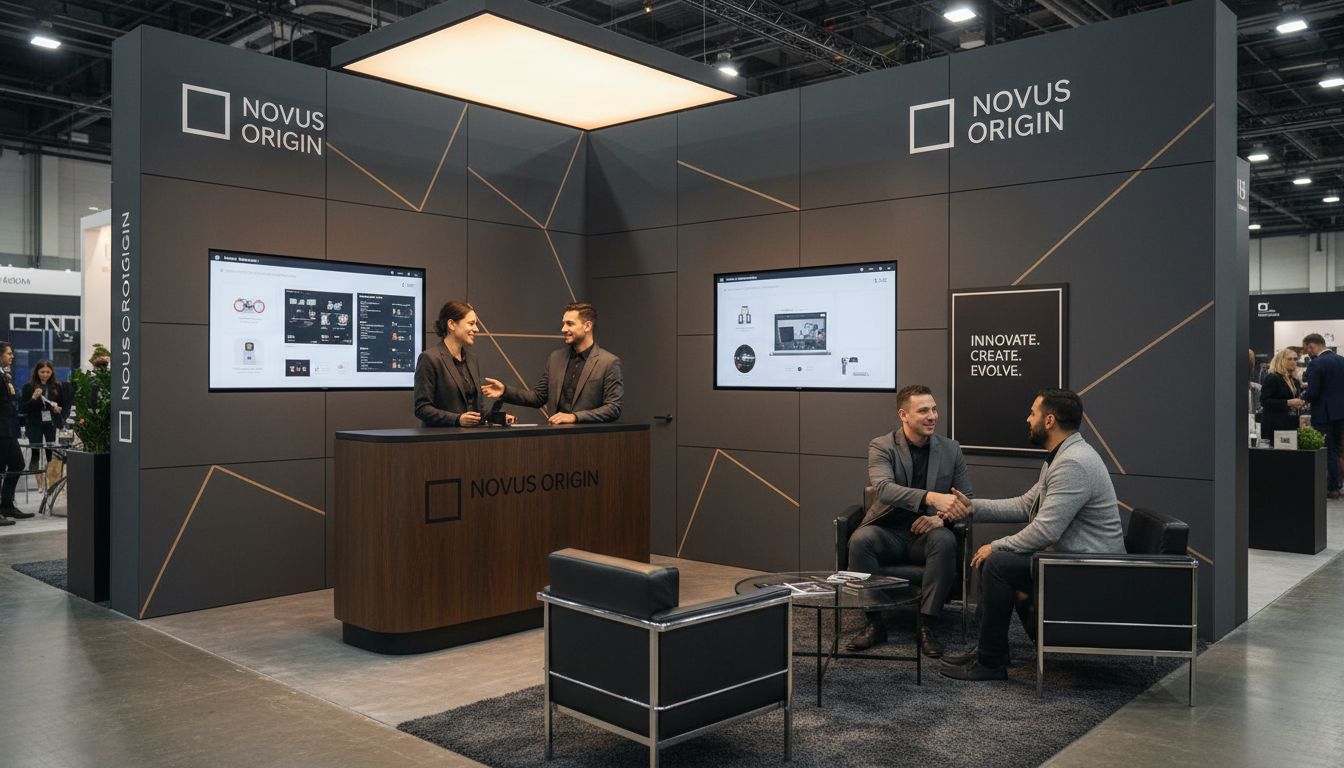
Successful booth design transforms physical space into a strategic engagement platform, where every square inch matters. Space optimization is not just about fitting more into less area, but creating an intelligent environment that naturally guides visitor movement, encourages interaction, and highlights your brand’s most compelling elements.
Effective layout planning begins with understanding traffic flow dynamics. Think of your booth as a carefully choreographed experience, where spatial arrangements act as silent conductors of attendee attention. The most successful designs create multiple engagement zones: a welcoming entrance that sparks initial curiosity, an open central area for primary interactions, and peripheral spaces for more detailed conversations or product demonstrations. This multi-layered approach prevents congestion while providing varied interaction opportunities.
Architecturally, your layout should balance openness with strategic focal points. Research suggests that booths with clear sight lines and unexpected visual breaks capture significantly more attention. Consider creating visual hierarchy through varying booth heights, using lightweight transparent materials, and incorporating strategic negative space that allows potential clients to glimpse your offerings without feeling overwhelmed. The Ultimate Guide to Trade Show Booth Types can provide additional insights into maximizing your spatial design strategy.
Ultimately, space optimization is an art of intentional design. Every element should serve a purpose – from walkway width to display placement. Avoid cluttering your space with excessive graphics or unnecessary furniture. Instead, curate your layout to tell a compelling brand story, creating intuitive pathways that naturally draw visitors deeper into your exhibit. The most memorable booths aren’t the largest, but those that understand how intelligent spatial design can transform passive observation into active engagement.
Interactive Features and Visitor Engagement
Visitor engagement is the heartbeat of successful trade show booth design, transforming passive observation into active, memorable interactions. In today’s hyper-connected world, attendees expect more than static displays – they crave immersive experiences that invite participation, spark curiosity, and create genuine connections with your brand’s narrative.
Interactive technologies have revolutionized booth engagement strategies, offering multiple touchpoints that cater to different learning styles and preferences. Digital interaction platforms such as touchscreen displays, augmented reality demonstrations, and gamified experiences can turn your booth into a dynamic storytelling environment. These technologies allow visitors to explore your offerings at their own pace, dive deeper into product details, and create personalized engagement journeys that feel tailored to their individual interests.
Strategic engagement goes beyond technological gimmicks – it’s about creating meaningful interactions that resonate emotionally and intellectually. Consider designing experiences that solve problems, answer questions, or provide tangible value to your visitors. Live demonstrations, interactive product simulations, and real-time consultation zones can transform your booth from a mere marketing space into a valuable resource center. Creative Exhibition Booth Ideas can inspire innovative approaches to creating these compelling interaction models.
The most successful interactive strategies blend human connection with technological innovation. Train your booth staff to complement digital experiences, ensuring they can seamlessly transition between technological demonstrations and personal conversations. Your goal is to create a holistic engagement ecosystem where technology enhances, rather than replaces, genuine human interaction. Remember, the most powerful trade show experiences are those that make attendees feel uniquely seen, understood, and valued – turning brief encounters into lasting brand relationships.
Technology Integration for Modern Booths
Digital innovation has transformed trade show booth design from static displays into dynamic, interactive experiences that capture attention and create meaningful connections. Modern exhibition spaces are no longer just about presenting information, but about creating immersive technological environments that engage visitors on multiple sensory and intellectual levels.
The key to successful technology integration lies in strategic implementation that enhances rather than overwhelms the visitor experience. Cutting-edge technologies like augmented reality (AR), interactive touchscreens, and real-time data visualization can provide powerful storytelling platforms. These tools allow brands to demonstrate complex concepts, showcase product functionalities, and create personalized interaction journeys that transform passive observers into active participants. Modular Trade Show Stands Built Around Your Goals can offer additional insights into how flexible design can support technological adaptability.
However, technology integration is not just about deploying the most advanced gadgets. It’s about creating a seamless ecosystem where digital elements complement human interaction. Consider implementing technologies that solve real visitor problems: QR code-enabled information stations, AI-powered chat interfaces for instant product queries, or interactive product configurators that allow visitors to customize and visualize solutions in real-time. The most effective technological integrations feel intuitive, providing value that extends beyond mere novelty.
Successful booth technology should be accessible, user-friendly, and aligned with your brand’s core message. Avoid overwhelming visitors with complex interfaces or gratuitous tech displays. Instead, focus on technologies that tell your brand’s story, demonstrate your innovative capabilities, and create memorable, shareable experiences that continue conversations long after the trade show concludes. The goal is to use technology as a bridge – connecting your brand’s vision with your audience’s curiosity and needs.
Common Booth Design Mistakes to Avoid
Trade show booth design is a delicate balance between creativity and strategic communication, where even small missteps can dramatically reduce your exhibition’s effectiveness. Many organizations unknowingly sabotage their own success by falling into predictable design traps that diminish their brand’s impact and visitor engagement.
One of the most critical mistakes is visual overcrowding – attempting to showcase everything at once. Booths cluttered with excessive graphics, dense text blocks, and competing visual elements create cognitive overwhelm for attendees. Successful designs prioritize clarity and focus, using strategic negative space to guide visitor attention toward key messaging and core brand values. Your booth should tell a compelling story, not serve as a comprehensive product catalog.
 Types of Exhibition Stands can help you understand how different booth configurations can support more focused design approaches.
Another frequent pitfall involves neglecting interactive engagement opportunities. Static displays that rely solely on traditional marketing materials fail to capture the dynamic attention of modern trade show attendees. Booths that do not provide meaningful ways for visitors to interact – whether through technology, live demonstrations, or personalized consultation zones – essentially become invisible in the bustling exhibition environment. The most effective designs transform passive observation into active participation, creating memorable experiences that extend beyond the immediate event.
Perhaps the most profound mistake is misalignment between booth design and brand identity. Your exhibition space should be a three-dimensional representation of your brand’s personality, values, and unique value proposition. Generic designs that could belong to any company undermine your distinctiveness. Every design element – from color palette to spatial arrangement – should communicate a coherent narrative that resonates with your target audience and differentiates you from competitors. Remember, your booth is not just a physical space, but a strategic communication platform that represents your brand’s most essential promise.
Elevate Your Brand with Expert Booth Design Solutions
The article highlights common challenges like visual overcrowding, poor traffic flow, and weak brand storytelling that can undermine your trade show success. If you are looking to create a booth that embraces visual clarity, strategic layout, and interactive engagement while reflecting your unique brand identity, you are not alone. Many businesses struggle to balance eye-catching design with functional space and meaningful visitor experiences. Your goal is to have a booth that invites curiosity, encourages exploration, and leaves a lasting impression.
At Adam Expo Stand, we understand these challenges and specialize in transforming complex booth design principles into custom, turnkey exhibition solutions. Our services include conceptual 3D design visualization, expert fabrication, and on-site assembly, all tailored to optimize your space and brand narrative. Whether you prefer a modular setup or a fully custom design, we focus on delivering not just a booth, but a strategic communication platform that captivates and converts visitors.
Explore how our creative exhibition booth ideas and modular trade show stands built around your goals can help you stand out at your next event. Don’t risk a forgettable presence when you can engage attendees with a booth designed to foster lasting brand connections. Visit Adam Expo Stand today to take the first step toward a visually impactful and functionally optimized exhibition space that truly tells your brand story.
Frequently Asked Questions
What are the key principles of effective booth design?
Effective booth design prioritizes visual clarity, strategic layout, and brand narrative alignment to create an engaging and memorable experience for attendees.
How can I ensure my booth communicates my brand effectively?
To communicate your brand effectively, maintain a consistent brand identity across all visual elements, including color palettes, typography, and imagery, creating a holistic visual language that resonates with your audience.
What role does technology play in modern booth design?
Technology plays a crucial role in enhancing visitor engagement through interactive features such as augmented reality, touchscreen displays, and gamified experiences that invite participation and provide immersive storytelling.
What are common mistakes to avoid in booth design?
Common mistakes include visual overcrowding, neglecting interactive engagement opportunities, and misalignment between booth design and brand identity. Prioritizing clarity, meaningful interactions, and coherent brand representation is essential.
Recommended
- Create the most successful stand design.
- The Ultimate Guide to Trade Show Booth Types and Strategies | Adam Expo Stand Solutions
- Modular Trade Show Stands Built Around Your Goals
- Exhibition Stand Design Ideas for Trade Shows in Europe
- Case Study: How a Simple Logo Mat Increased Trade Show Leads by 45% – Mats4U USA