Modular Booth System Explained: Complete Trade Show Guide
More than 80 percent of american exhibitors now consider flexibility and cost savings as top priorities when planning their trade show displays. Businesses face pressure to stand out at crowded events without overspending or locking themselves into outdated setups. Modular booth systems promise a smarter path forward, yet misconceptions still lead many to underestimate their design potential. This article shines a light on the real advantages and clears up the myths, guiding companies toward display solutions that adapt to any marketing challenge.
Table of Contents
- Defining Modular Booth Systems And Misconceptions
- Major Types Of Modular Booth Systems Available
- Core Features And Modular Stand Benefits
- How Modular Booth Systems Are Assembled
- Cost Considerations And Rental Alternatives
Key Takeaways
| Point | Details |
|---|---|
| Modular Booth Flexibility | Modular booth systems allow businesses to create adaptable displays that can be reconfigured for different event sizes and marketing objectives. |
| Cost-Effective Investment | These systems reduce long-term exhibition costs by minimizing transportation, storage, and setup expenses compared to traditional custom-built displays. |
| Design Versatility | Modular booths offer high-quality, customizable designs that can rival traditional exhibits, allowing for quick graphic updates and visual transformations. |
| Efficient Assembly Process | The intuitive design of modular systems enables rapid, tool-free setup and breakdown, making it easier for exhibitors to create compelling environments quickly. |
Defining Modular Booth Systems and Misconceptions
Modular booth systems represent a revolutionary approach to trade show exhibition design that transforms how businesses create and deploy their event displays. At its core, modular design allows exhibitors to construct complex display environments using smaller, standardized units that can be easily reconfigured, transported, and adapted to different event spaces and marketing objectives.
Unlike traditional custom-built exhibits, modular booth systems offer unprecedented flexibility and strategic advantages. These systems are composed of interchangeable components that can be mixed, matched, and reassembled to suit varying booth sizes, event requirements, and brand storytelling needs. For example, a company might start with a compact 10×10 foot configuration for a regional trade show and later expand to a 20×20 foot layout for a major international exhibition, using the same core modular elements.
Common misconceptions about modular booth systems often prevent businesses from leveraging their full potential. Many exhibitors mistakenly believe these systems are limited in design possibilities or lack the sophistication of custom builds. In reality, modern modular solutions offer incredible design versatility, high-quality materials, and professional aesthetics that can rival or even surpass traditional custom exhibits. Why Choose Modular Stands: Complete Guide provides deeper insights into the strategic benefits of these innovative display solutions.
The key advantages of modular booth systems extend far beyond simple convenience. They represent a strategic investment in adaptable marketing infrastructure that enables businesses to:
- Reduce overall exhibition costs
- Minimize transportation and storage expenses
- Quickly adapt displays for different event contexts
- Maintain consistent brand messaging across multiple events
- Accelerate setup and teardown processes
- Minimize environmental impact through reusable components
By understanding the true potential of modular booth systems, businesses can transform their trade show presence from static displays to dynamic, responsive brand experiences that engage and inspire potential clients and partners.
Major Types of Modular Booth Systems Available
Modular booth systems have evolved into sophisticated design solutions, offering businesses multiple configuration options to meet diverse exhibition needs. These systems are typically categorized into several primary types, each providing unique advantages for different marketing strategies and event requirements.
The first major category is frame-based modular systems, which utilize aluminum or lightweight metal frames as the primary structural element. These systems provide exceptional versatility, allowing exhibitors to create multiple booth layouts by simply reconfiguring frame components. Graphic panels can be easily attached, removed, or swapped out, enabling quick brand messaging updates and dramatic visual transformations. Modular Trade Show Stands – Customizable Booth Designs explores how these innovative designs can maximize exhibition potential.
Another prominent type is the tension fabric modular system, which has gained significant popularity in recent years. These lightweight systems use stretch fabric graphics tensioned over aluminum frames, creating seamless, vibrant visual displays that are remarkably easy to transport and assemble. The fabric graphics can be printed with high-resolution brand imagery, creating immersive environments that capture attendee attention while maintaining exceptional portability.
The third critical category includes hybrid modular systems, which blend traditional booth construction techniques with modern modular design principles. These sophisticated solutions combine rigid structural elements with flexible components, allowing for more complex and elaborate booth configurations. Hybrid systems often incorporate wood, metal, fabric, and digital display technologies to create truly unique and engaging exhibition spaces.
Key characteristics that distinguish these modular booth system types include:
- Structural flexibility and reconfiguration potential
- Ease of transportation and storage
- Graphic customization options
- Speed of setup and teardown
- Cost-effectiveness compared to traditional custom builds
- Scalability across different event sizes and formats
By understanding these different modular booth system types, businesses can strategically select a solution that aligns perfectly with their brand presentation goals, budget constraints, and logistical requirements.
Core Features and Modular Stand Benefits
Modular booth systems represent a strategic approach to exhibition design that goes far beyond traditional display solutions. These innovative platforms offer businesses unprecedented flexibility, enabling them to create dynamic, adaptable marketing environments that can transform across different events and marketing scenarios.
At the core of modular stand design are several critical features that distinguish these systems from conventional exhibition displays. Rapid reconfiguration stands out as a primary advantage, allowing companies to quickly adjust their booth layout to suit specific event requirements, audience demographics, or spatial constraints. Exhibitors can seamlessly expand, contract, or completely reimagine their booth configuration without investing in entirely new infrastructure. Modular Exhibition Stands: Smart, Flexible & Sustainable Displays provides comprehensive insights into how these adaptable systems revolutionize trade show marketing.
The economic benefits of modular booth systems are equally compelling. Unlike traditional custom-built exhibits that require complete replacement for each design iteration, modular stands enable businesses to make strategic, incremental investments. Companies can start with a basic configuration and progressively enhance their display by adding new components, graphics, or technological integrations. This approach significantly reduces long-term exhibition expenses while maintaining a fresh, contemporary brand presentation.
Key benefits that make modular booth systems an intelligent marketing investment include:
- Transportation Efficiency: Compact, lightweight components that pack easily and reduce shipping costs
- Storage Convenience: Modular elements that can be neatly stored and quickly retrieved
- Design Versatility: Ability to create multiple booth configurations from the same core components
- Branding Flexibility: Simple graphic panel replacements to update messaging and visual identity
- Sustainability: Reduced material waste and potential for reuse across multiple events
- Cost-Effectiveness: Lower long-term investment compared to custom-built exhibit alternatives
By understanding and leveraging these core features, businesses can transform their trade show presence from static displays to dynamic, strategic marketing platforms that adapt to evolving business objectives and market opportunities.
How Modular Booth Systems Are Assembled
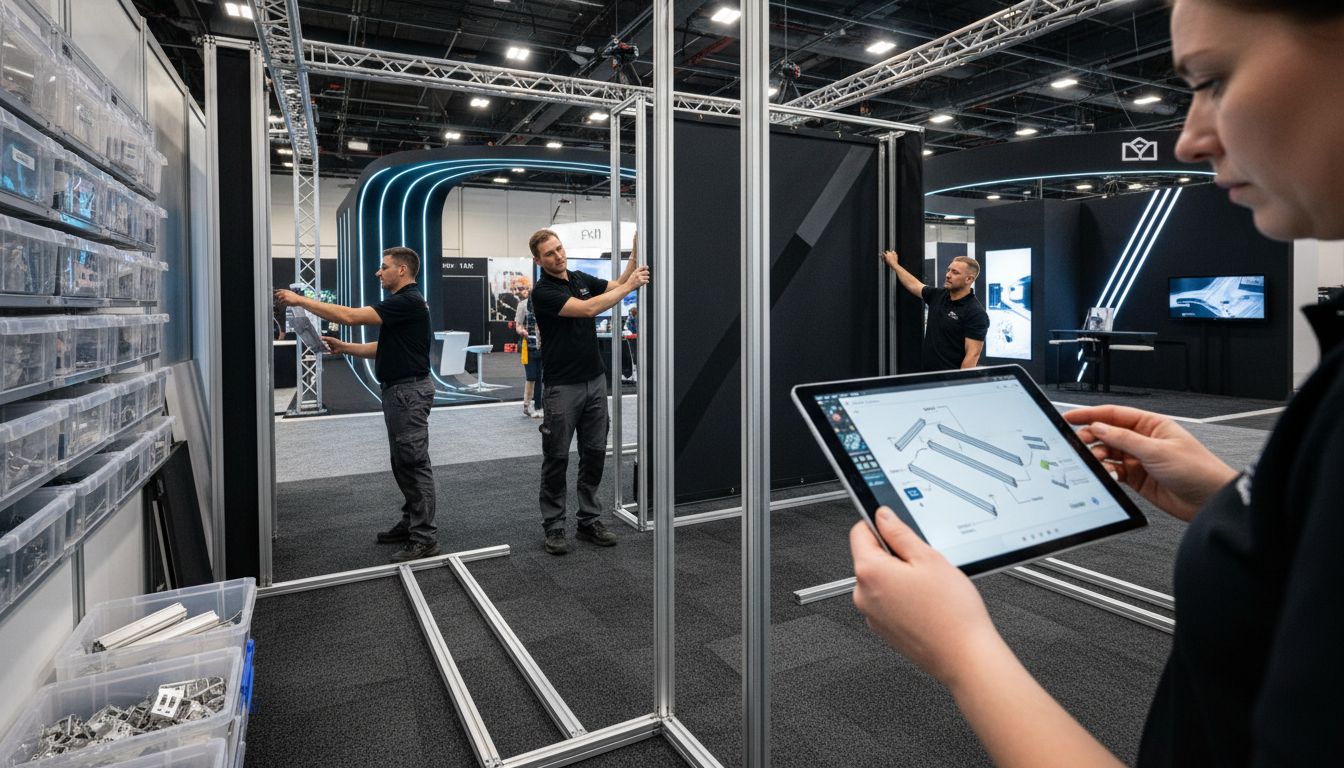
Modular booth system assembly represents a precision-engineered process designed to maximize efficiency and user-friendliness for exhibitors. Unlike traditional exhibit construction, these systems are built around intuitive connection mechanisms that enable rapid, tool-free setup and breakdown, transforming complex marketing environments into manageable, adaptable displays.
The fundamental assembly process typically involves several key stages of strategic component integration. Structural frame assembly forms the initial foundation, where lightweight aluminum or composite frames are connected using innovative locking mechanisms that ensure stability and quick alignment. Precision-engineered connectors allow exhibitors to create various booth configurations with minimal technical expertise. Graphic panels and additional design elements can then be seamlessly attached to these structural frames, creating a cohesive and visually compelling exhibition space. Types of Exhibition Stands | Choose the Best for Your Brand offers deeper insights into how these assembly techniques revolutionize trade show presentations.
Research into modular design principles emphasizes the importance of Design for Assembly techniques, which focus on simplifying and streamlining the construction process. These principles aim to reduce assembly time, minimize potential errors, and create systems that can be quickly reconfigured by personnel with varying levels of technical skill. Modern modular booth systems incorporate color-coded components, intuitive connection points, and comprehensive assembly guides that transform what was once a complex setup into a straightforward, almost plug-and-play experience.
The typical assembly workflow for modular booth systems generally follows these critical steps:
- Frame Construction: Connecting primary structural elements using quick-lock mechanisms
- Panel Installation: Attaching graphic panels, fabric displays, or additional design components
- Technology Integration: Mounting digital displays, lighting systems, and interactive elements
- Accessories Placement: Adding shelving, product displays, and branded elements
- Final Configuration: Making precision adjustments to ensure optimal visual presentation
- Quality Check: Verifying structural integrity and design alignment
By understanding and mastering these assembly techniques, businesses can transform their trade show presence into a dynamic, easily deployable marketing platform that adapts seamlessly to diverse exhibition environments.
Cost Considerations and Rental Alternatives
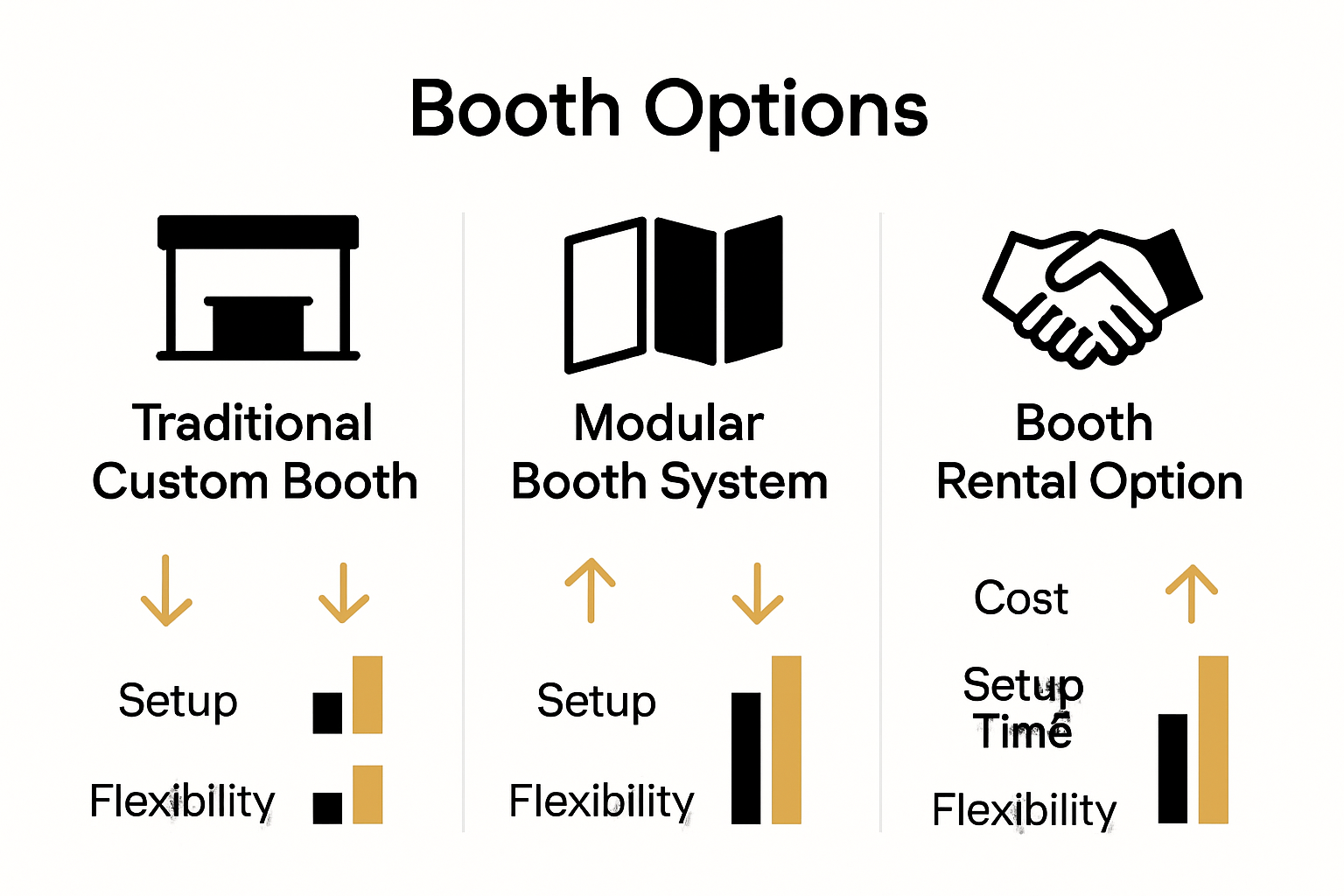
Trade show booth expenses represent a significant investment for businesses, making modular systems an increasingly attractive solution for cost-conscious marketing teams. Understanding the financial landscape of exhibition displays requires a nuanced approach that considers both upfront purchasing costs and long-term strategic value.
The initial investment in modular booth systems can range significantly, with prices typically varying based on complexity, size, and customization requirements. Purchasing options include complete ownership of booth components, which provides maximum flexibility but demands a higher upfront capital expenditure. Companies can expect to invest anywhere from $5,000 to $50,000 for a comprehensive modular booth system, depending on the sophistication of design and technological integrations. Why Use Modular Exhibition Stands: Complete Guide offers deeper insights into navigating these financial considerations for businesses of all sizes.
Rental alternatives have emerged as a compelling option for businesses seeking more financial flexibility. Booth rental programs allow companies to access high-quality modular displays without the substantial initial investment, typically charging per-event or short-term rates. These solutions are particularly advantageous for businesses with irregular trade show participation, startups with limited marketing budgets, or organizations testing new market segments. Rental costs can range from $1,500 to $15,000 per event, providing a more predictable and manageable expense structure.
Key financial considerations for modular booth investments include:
- Upfront Purchasing Costs: Initial investment in owned booth components
- Rental Expenses: Per-event or short-term display solutions
- Transportation Logistics: Shipping and handling expenses
- Storage Requirements: Long-term storage costs for owned systems
- Maintenance Expenses: Ongoing upkeep and potential component replacement
- Customization Potential: Additional costs for graphic updates and design modifications
By carefully evaluating these financial factors, businesses can develop a strategic approach to trade show marketing that balances cost-effectiveness with professional visual presentation and brand impact.
Transform Your Trade Show Presence with Expert Modular Booth Solutions
The article highlights the challenges of creating flexible, cost-effective, and visually captivating trade show displays through modular booth systems. If you are struggling with high exhibition costs, inefficient setup times, or limited adaptability at events, modular booth systems offer a strategic way to overcome these obstacles. By leveraging features like rapid reconfiguration, lightweight frame-based designs, and sustainable reusable components, you can ensure your brand stands out without excessive expense or complexity.
At Adam Expo Stand, we specialize in turning these concepts into reality with personalized, turnkey services tailored to your needs. Whether you want a compact display for regional events or scalable solutions for larger exhibitions, our expertise in modular exhibition stands ensures a seamless experience from 3D design visualization to on-site assembly and logistics. Discover how our innovative, sustainable modular stands can reduce costs, speed up setup, and maintain consistent branding across all your events. Start enhancing your trade show impact today by exploring why modular exhibition stands are smart investments and learn how customizable booth designs can boost your visibility.
Don’t let traditional booth limitations hold your brand back. Visit Adam Expo Stand now to connect with expert designers and secure a modular booth system that adapts to your evolving marketing goals and delivers measurable results.
Frequently Asked Questions
What is a modular booth system?
A modular booth system is a trade show display design that allows businesses to create flexible and reconfigurable exhibition environments using standardized components. This approach contrasts with custom-built exhibits, providing versatility and efficiency for different event settings.
What are the main types of modular booth systems?
The main types of modular booth systems include frame-based modular systems, tension fabric modular systems, and hybrid modular systems. Each type offers unique benefits, such as structural flexibility, ease of transport, and the ability to combine different materials and design elements.
How does the assembly process work for modular booth systems?
The assembly process for modular booth systems involves connecting lightweight frames using quick-lock mechanisms, attaching graphic panels, integrating technology, and ensuring a final configuration that optimizes presentation. This process allows for fast, tool-free setup and breakdown.
What are the cost considerations when investing in modular booth systems?
Cost considerations include the upfront investment for purchasing booth components, rental alternatives for short-term needs, transportation and storage expenses, and ongoing maintenance. Companies can evaluate these factors to determine the most cost-effective approach to their exhibition marketing strategy.