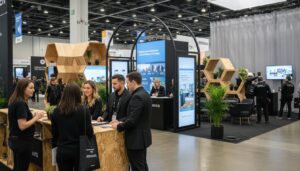
Are you ready to steal the show at your next big event? In the bustling world of fair marketing, standing out can feel like finding a needle in a haystack, especially in vibrant exhibition hubs like Madrid or Barcelona. Whether you’re preparing for the massive International Tourism Trade Fair FITUR or a niche industry expo, your booth needs to do more than just look good; it needs to tell a story that stops people in their tracks.
A great trade show booth design is your secret weapon for turning curious passersby into loyal customers. But here’s the thing: trends change fast, and what worked yesterday might not work tomorrow. That’s why we’ve put together the ultimate guide to trade show booth design in Spain with 6 current keys to success. We’ll show you how to blend smart technology integration, like interactive screens, with sustainable exhibitions that show you care about the planet. From mastering minimalist design to nailing your post event follow up, this guide is your roadmap to building a custom stand design that gets real results. Let’s dive in and make your next exhibition your best one yet.
Key 1: Strategic Minimalism
You might think a successful booth needs to be loud, crowded, and bursting with color. But often, the opposite is true. The first key to success is embracing strategic minimalism, a design philosophy that proves “less is more.” This approach is about creating a clean, open, and inviting space that feels calm and focused amidst the chaos of a busy exhibition hall.
Balancing Simplicity and Impact
A minimalist design uses clean lines, uncluttered layouts, and a limited color palette to create a sense of harmony and sophistication. Instead of overwhelming visitors with too much information, it gives your key products and messages room to breathe. Think of it like a beautiful art gallery. The white walls aren’t boring; they make the artwork on display stand out even more. Your booth can do the same for your brand. This simple, balanced approach makes your space feel more professional and approachable, encouraging people to step inside and explore.
Incorporating Bold, Creative Elements
Minimalism doesn’t mean boring. The secret is to pair that simplicity with a few bold and creative elements that make a powerful statement. This is where you can add a touch of Spanish flair, think unique architectural shapes, a stunning centerpiece, or a dramatic splash of color on a single wall. You could use striking materials like reclaimed wood, polished metal, or colorful textiles to add texture and visual interest. These creative elements act as focal points, drawing the eye and sparking curiosity. It’s this smart combination of simple and stunning that makes your fair marketing truly effective.
The Role of Lighting
Lighting is one of the most powerful tools in a designer’s toolkit. It can completely transform the mood and feel of your booth. Instead of flooding your entire space with harsh, bright lights, use lighting strategically. Use spotlights to highlight your most important products or a beautifully designed graphic. Use softer, ambient lighting to create a warm and welcoming atmosphere in your seating areas. Good lighting guides visitors’ attention, creates a memorable ambiance, and makes your products look their absolute best without overwhelming the space.
Key 2: Seamless Technology Integration for Deeper Engagement
In a world where we’re all connected through our devices, integrating technology into your exhibition stand is no longer just a cool idea, it’s a must. Smart technology can turn your booth from a passive display into an active, engaging experience that captures visitors’ attention and imagination. The goal is to make the technology feel natural and helpful, not complicated or gimmicky.
Interactive Elements for a Wow Factor
Gone are the days when a simple touchscreen was enough to impress. Today, you can create truly memorable moments with more advanced interactive elements. Imagine visitors using an Augmented Reality (AR) app on their phone to see a 3D model of your product right in front of them. Or, they could put on a Virtual Reality (VR) headset to take a virtual tour of your factory or see your service in action. These interactive experiences for exhibition booths are fun, memorable, and give people a much deeper understanding of what you offer. They create a buzz and make your booth a must see destination.
How Can Technology Simplify the Visitor Journey?
Technology shouldn’t just be for show; it should also make things easier for your visitors and your team. You can use apps that allow attendees to schedule a demo with your staff right from their phone, so they don’t have to wait in line. QR codes can be placed around your booth, letting visitors instantly download brochures, case studies, or contact information. This is especially useful for lead capture technology. Instead of manually writing down names and emails, a simple scan can capture all the information you need, making your follow up process faster and more accurate.
Data Driven Design
One of the most powerful aspects of technology is its ability to give you valuable data. You can use sensors to track foot traffic within your booth, showing you which areas are the most popular and where people are spending the most time. Are they gathering around your new product display or spending more time in the interactive zone? This real time analytics helps you understand what’s working and what isn’t. You can even make adjustments on the fly to improve engagement, ensuring you get the most out of your investment.
Key 3: Sustainable Design
Today, people care about the planet, and they want to support businesses that do, too. The third key to success is embracing sustainable exhibition stand ideas. Building an eco friendly booth isn’t just good for the environment; it’s also great for your brand’s reputation. It shows that your company is forward thinking and committed to corporate social responsibility in events, which can attract a new wave of environmentally conscious customers.
The Growing Demand for Eco Friendly Exhibiting
Across Europe, there’s a huge push for greener business practices. Trade show organizers and attendees alike are looking for exhibitors who are making an effort to reduce their carbon footprint. By adopting a sustainable approach, you position your brand as a leader in the industry. It’s a powerful message that tells the world your company cares about more than just profit. This is especially important for younger audiences, who often make purchasing decisions based on a company’s values.
Material Choices and Modular Systems
So, how do you build a sustainable booth? It starts with your material choices. Instead of using disposable materials, opt for eco friendly booth materials for European expos. This could include bamboo, which grows quickly; recycled plastics; or even cardboard that can be recycled after the show. Better yet, consider a modular stand design. These stands are built from reusable components that can be reconfigured to fit different spaces and events. A single modular stand can be used for years, saving you money and drastically reducing waste. It’s a smart, flexible, and sustainable solution.
Communicating Your Green Commitment
Building a sustainable booth is a great first step, but you also need to tell people about it. Let visitors know that your stand is made from recycled materials or that your lighting is energy efficient. You can add a small sign or include a note in your digital brochure. Communicating your commitment to sustainability is a fantastic way to enhance your brand’s reputation. It creates a positive story that people will remember and share, helping you build trust and goodwill with your audience.
Key 4: Creating Multi Sensory, Memorable Experiences
Think about your most cherished memories. Chances are, they involve more than just what you saw. They might include a smell, a sound, or a feeling. The fourth key to a successful trade show booth is to create a multi sensory experience that engages visitors on an emotional level. When you appeal to more than just sight, you create a powerful and lasting impression.
What Makes a Booth Unforgettable?
A truly unforgettable booth is one that tells a story and makes people feel something. It’s a space that is designed with human emotion in mind. Instead of just displaying products, you create an environment. It’s the difference between looking at a picture of a coffee shop and actually sitting in one, smelling the freshly ground beans and hearing the soft music. By engaging multiple senses, you can transport visitors into your brand’s world and create a connection that goes beyond a simple business transaction.
The Power of Scent
Our sense of smell is incredibly powerful and closely linked to memory and emotion. Olfactory marketing for booths is a cutting edge technique that uses scents to create a specific atmosphere. For example, a brand selling outdoor gear might use a subtle pine scent to evoke the feeling of being in a forest. A luxury brand might use a light, elegant floral fragrance. The right scent can make your booth feel more inviting, help people relax, and create a unique brand identity that visitors will remember long after they’ve left.
The Importance of Comfort
A busy trade show can be exhausting. Visitors are on their feet for hours, walking through crowded halls. One of the simplest yet most effective ways to make your booth a haven is to focus on comfort. Incorporate a small lounge area with comfortable seating where people can rest their feet for a few minutes. Offer a cup of coffee or a bottle of water. Providing a comfortable, welcoming space encourages people to stay longer, giving your team more time to chat with them and build relationships. It shows that you care about their experience, not just about making a sale.
Key 5: Strategic Planning and Flawless Logistics
A beautiful booth is worthless if it doesn’t arrive on time or if your team isn’t prepared to run it. The fifth key to success is something that happens long before the trade show even begins: meticulous strategic planning and flawless logistics. This behind the scenes work is the foundation upon which a successful exhibition is built.
Pre Show Blueprint
Your journey to a successful exhibition starts with a solid plan. First, you need a strong concept development phase, where you decide on the main story you want to tell. What is the key message you want visitors to take away? Once you have your concept, you need to set a clear budget and establish Key Performance Indicators (KPIs). KPIs are the goals you’ll use to measure success. For example, you might aim to collect 200 qualified leads or book 20 meetings. This pre show blueprint will guide every decision you make, from the booth design to your marketing efforts.
Navigating Venue Regulations
Every exhibition hall has its own set of rules and regulations, and major Spanish venues like Fira Barcelona and IFEMA Madrid are no exception. There are rules about everything from the height of your stand to electrical wiring and safety requirements. Ignoring these regulations can lead to costly fines or even being forced to change your design at the last minute. It’s crucial to work with an experienced booth builder who understands these rules and can ensure your stand is fully compliant. This saves you from headaches and ensures a smooth setup process.
On Site Management
Your booth staff are the face of your brand. They need to be well trained, knowledgeable, and enthusiastic. Before the event, hold a training session to make sure everyone understands the key messages, knows how to operate any technology, and feels confident talking to visitors. It’s also wise to have a contingency plan. What happens if a screen stops working or a key staff member gets sick? Having a plan for these potential issues will help you handle any challenges calmly and professionally, ensuring your event runs smoothly from start to finish.
Key 6: Post Event Analysis
The trade show might be over, but your work isn’t done. Many exhibitors make the mistake of packing up and moving on, letting a pile of valuable leads go cold. The sixth and final key to success is a robust post event analysis and follow up strategy. This is where you convert the connections you made into real business opportunities.
Why is Follow Up So Critical?
Think about all the effort and investment you put into the trade show. The follow up is how you get your return on that investment. Failing to follow up is like running a marathon and stopping just before the finish line. The leads you collected are from people who showed genuine interest in your brand. A prompt and personalized follow up reminds them of your conversation and keeps your company top of mind. This crucial step is often what separates the most successful exhibitors from the rest.
A System for Success
The best way to ensure effective follow up is to have a system in place before the show even starts. As you collect leads, categorize them. For example, you can label them as “hot” (ready to buy), warm (interested but need more information), or “cool” (potential future customer). This allows you to tailor your follow up strategies. Hot leads should get a personal phone call or email within 24 hours. Warm leads can be added to an email nurture campaign that provides them with more information over the next few weeks.
Measuring True ROI
After the follow up process is underway, it’s time for the final post event analysis. This is where you calculate your true return on investment (ROI). Compare all the costs associated with the event, including the booth design, staff travel, and promotional materials, against the value of the deals you closed and the strong leads still in your pipeline. Analyzing what worked and what didn’t is vital. This process of calculating return on investment for exhibitions provides invaluable insights that will help you refine your strategy and make your next trade show even more successful.
Conclusion: Your Blueprint for Exhibition Success in Spain
You now have the blueprint for creating a trade show booth that not only stands out but also delivers real results. By focusing on these six keys, strategic minimalism, seamless technology, sustainability, multi sensory experiences, flawless planning, and diligent follow up, you can transform your presence at any Spanish trade show.
A successful booth is more than just a structure, it’s a strategic blend of art, science, and smart business. It’s an experience that captures attention, tells a compelling story, and builds meaningful connections. Remember, your booth is your brand’s physical handshake, make it a firm, confident, and memorable one.
Ready to create a booth that captures attention and drives results at your next Spanish trade show? Contact our experts to bring your vision to life and build your next success story.