Modular Booth Solutions Explained: Complete Overview
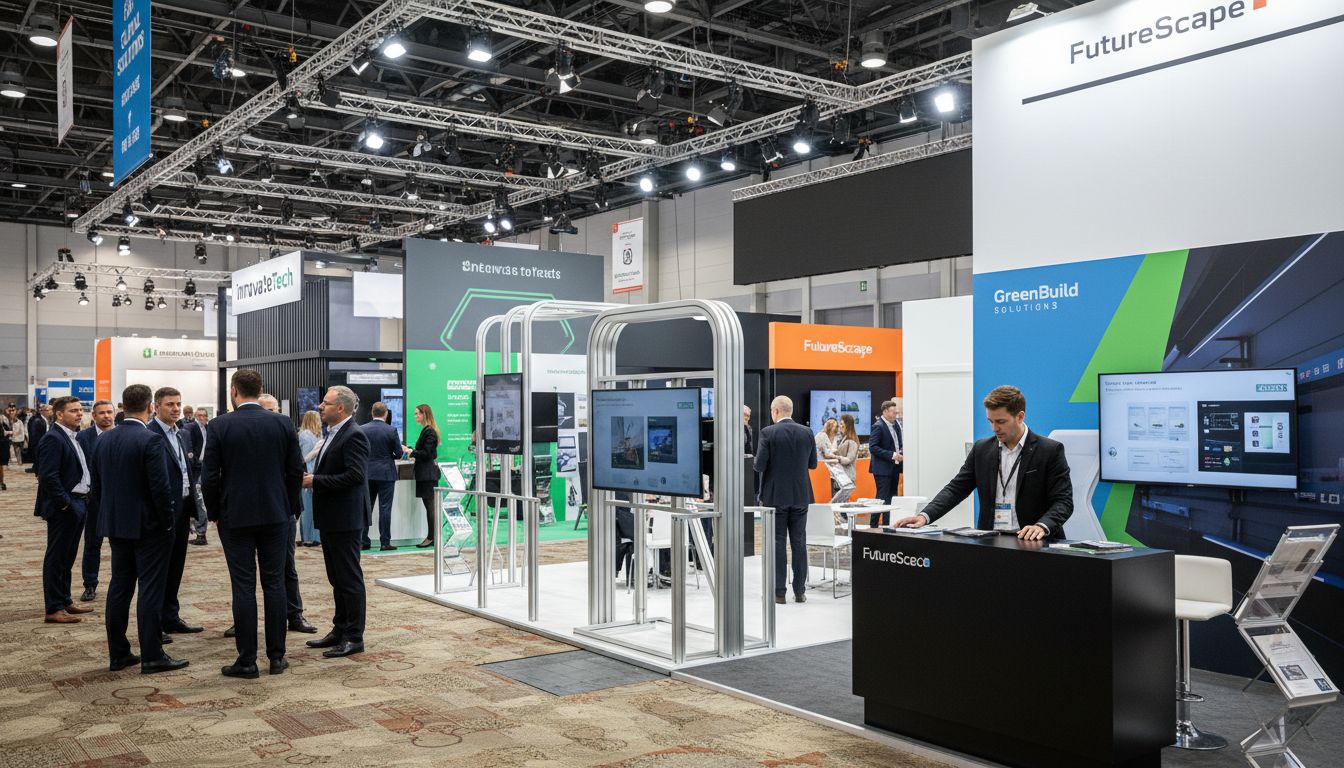
More than 60 percent of exhibitors now seek flexible displays to stretch their event budgets. Businesses that attend multiple trade shows face constant pressure to create engaging spaces without overspending or wasting materials. Modular booth solutions offer a smart way to achieve this balance with easily reconfigurable designs and cost savings. Discover how these adaptable systems deliver fresh branding, quick setup, and sustainability advantages every time you hit the exhibition floor.
Table of Contents
- Defining Modular Booth Solutions
- Types of Modular Booth Systems Available
- Key Features and Customization Options
- Setup, Dismantling, and Logistics Explained
- Cost Efficiency and Sustainability Benefits
- Comparing Modular Booths to Custom Stands
Key Takeaways
| Point | Details |
|---|---|
| Flexibility and Adaptability | Modular booth solutions allow rapid reconfiguration for different events, enhancing strategic agility and cost-effectiveness. |
| Cost Efficiency | By reusing components, companies can significantly reduce exhibition costs by up to 60% over time compared to traditional stands. |
| Customization Capabilities | The adaptive design elements enable businesses to create unique brand representations that align with marketing objectives. |
| Sustainability Focus | Modular designs minimize waste and lower carbon footprints, supporting corporate sustainability strategies in exhibition marketing. |
Defining Modular Booth Solutions
Modular booth solutions represent an innovative approach to trade show and exhibition design that prioritizes flexibility, efficiency, and strategic brand representation. At their core, these solutions are configurable display systems composed of interchangeable components that can be reconfigured, expanded, or modified to suit different event requirements and spatial constraints.
The fundamental philosophy behind modular booth solutions centers on adaptability. Unlike traditional fixed exhibition stands, these systems allow businesses to create dynamic, scalable environments that can transform rapidly. Companies can quickly adjust their booth layout, size, and configuration without investing in entirely new infrastructure. This approach provides remarkable cost-effectiveness and strategic agility for organizations participating in multiple events with varying spatial specifications.
Key characteristics of modular booth solutions include:
- Lightweight, portable components
- Quick and easy assembly and disassembly
- Customizable design elements
- Reusable across multiple events
- Potential for significant cost savings
From a technical perspective, modular booth solutions draw inspiration from advanced design principles like Modular Function Deployment (MFD). Research indicates that integrating assembly-oriented architectural strategies can significantly enhance display efficiency and automation readiness. By incorporating design principles that emphasize both assembly and disassembly considerations, businesses can create exhibition spaces that are not just visually compelling but also strategically engineered.
For businesses seeking comprehensive exhibition solutions, understanding these modular approaches becomes crucial. Why Use Modular Exhibition Stands: Complete Guide provides deeper insights into how these innovative display strategies can transform trade show participation.
Types of Modular Booth Systems Available
Modular booth systems have evolved to offer businesses a wide range of customizable configurations that cater to diverse exhibition and event marketing needs. These systems are typically categorized into several primary types, each designed to provide unique advantages for different presentation strategies and spatial requirements.
Portable Modular Systems represent the most versatile category, allowing exhibitors to create compact, lightweight displays that can be easily transported and rapidly assembled. These systems often feature aluminum frame structures with interchangeable fabric graphics, enabling quick visual transformations between events. Ideal for companies with frequent travel schedules or limited logistics resources, portable modular booths provide maximum flexibility without compromising professional aesthetics.
Key types of modular booth systems include:
- Pop-up Display Systems: Collapsible frames with lightweight fabric graphics
- Truss-based Modular Stands: Robust structural frameworks for larger exhibition spaces
- Fabric Tension Frame Solutions: Seamless graphic displays with minimal hardware
- Hybrid Modular Configurations: Combining multiple material types and design elements
- Scalable Panel Systems: Expandable displays that adjust to different booth sizes
Custom Modular Configurations offer more advanced solutions for brands seeking highly personalized exhibition experiences. These systems allow for intricate design modifications, integrated technology features, and complex spatial arrangements that can be reconfigured across multiple events. Companies can select specific modules, add-on components, and custom graphics to create truly unique brand representations that stand out in competitive exhibition environments.
For exhibitors looking to explore the nuanced world of modular booth design, Modular Trade Show Stands – Customizable Booth Designs provides comprehensive insights into selecting the right system for specific marketing objectives.
Key Features and Customization Options
Modular booth solutions offer an unprecedented level of design flexibility, empowering businesses to create exhibition spaces that are not just visually striking but strategically aligned with their brand identity and marketing objectives. The true power of these systems lies in their comprehensive customization capabilities, which extend far beyond traditional display configurations.
At the core of modular booth customization are adaptive design elements that can be seamlessly transformed to meet varying event requirements. Graphic panels, structural components, lighting systems, and technological integrations can be interchanged, reconfigured, and optimized to create unique spatial experiences. This means companies can maintain a consistent brand aesthetic while simultaneously adapting their booth’s scale, layout, and functionality across different trade show environments.
Key customization features include:
- Graphic Interchangeability: High-resolution fabric and rigid panel graphics that can be quickly replaced
- Structural Modularity: Adjustable frame systems supporting multiple booth sizes and configurations
- Technology Integration: Built-in mounting points for screens, tablets, and interactive displays
- Lighting Flexibility: Modular lighting solutions that can be repositioned and reconfigured
- Accessory Compatibility: Add-on elements like shelving, product display areas, and meeting spaces
Beyond physical customization, modern modular booth systems also offer sophisticated branding opportunities. Companies can incorporate digital interfaces, augmented reality experiences, and interactive technology seamlessly into their booth design. This allows for dynamic presentation methods that engage visitors more effectively than traditional static displays. The ability to quickly swap out graphic elements means brands can maintain a fresh, current appearance while minimizing long-term investment in exhibition infrastructure.
Modular Exhibition Stands: Smart, Flexible & Sustainable Displays provides deeper insights into how these innovative design strategies can transform exhibition marketing approaches, offering businesses unprecedented creative and strategic flexibility.
Setup, Dismantling, and Logistics Explained
Modular booth logistics represent a critical aspect of exhibition planning, transforming complex display management into a streamlined, efficient process. Unlike traditional exhibition stands that require extensive on-site construction, modular systems are engineered to minimize setup time, reduce labor costs, and simplify transportation challenges.
The setup process for modular booth systems is designed with rapid deployment as a primary objective. Most contemporary modular displays can be assembled by small teams in remarkably short timeframes typically ranging from 30 minutes to 2 hours, depending on the system’s complexity. Standardized connection mechanisms, lightweight aluminum frames, and pre-engineered components allow exhibitors to transform bare event spaces into professional brand environments with minimal technical expertise.
Key logistics considerations for modular booth systems include:
- Compact, stackable transportation cases
- Lightweight structural components
- Tool-free assembly mechanisms
- Intuitive connection points
- Standardized packaging dimensions
- Minimal required personnel for setup
- Quick graphic panel installation
Dismantling procedures mirror the setup process, emphasizing speed and efficiency.
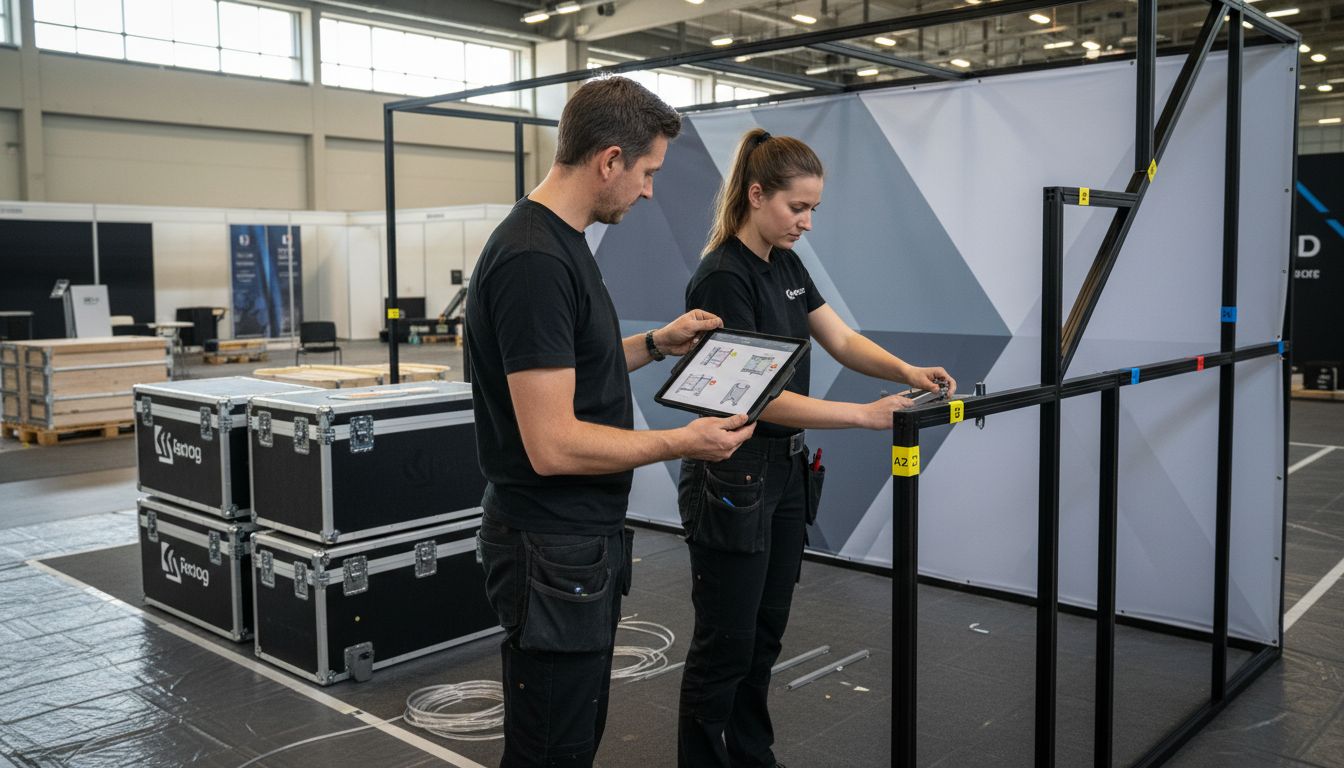 Most modular systems can be disassembled and packed within 45-90 minutes, allowing exhibitors to quickly transition between events or return to their home base. The design philosophy prioritizes systematic deconstruction, with clearly labeled components and logical breakdown sequences that minimize potential errors during breakdown.
For businesses seeking comprehensive insights into optimizing their exhibition logistics, Modular Trade Show Stands Built Around Your Goals offers detailed strategies for maximizing exhibition performance through intelligent booth management.
Cost Efficiency and Sustainability Benefits
Modular booth solutions represent a revolutionary approach to exhibition design that simultaneously addresses two critical business concerns: financial efficiency and environmental responsibility. By reimagining traditional exhibition infrastructure, these innovative systems create a paradigm shift in how companies approach trade show participation, dramatically reducing long-term expenses while minimizing environmental impact.
The financial advantages of modular booth systems are substantial and multifaceted. Unlike traditional custom-built exhibits that require complete reconstruction for each event, modular designs allow businesses to reuse core structural components across multiple exhibitions. This approach can reduce overall exhibition expenses by up to 60% over three to five years, as companies eliminate repeated fabrication costs and minimize storage and transportation expenses. The initial investment in a high-quality modular system pays dividends through its adaptability and longevity.
Key cost and sustainability benefits include:
- Reduced material waste from single-use exhibition structures
- Lower transportation costs due to compact, lightweight design
- Minimized storage requirements
- Ability to reconfigure displays for different event specifications
- Significantly reduced carbon footprint compared to traditional booth construction
- Lower long-term capital investment in exhibition infrastructure
- Enhanced brand perception through sustainable practices
From an environmental perspective, modular booth solutions align perfectly with emerging corporate sustainability strategies. Research indicates that these systems optimize material use through intelligent design, enabling component reuse and minimizing waste generation. By implementing modular-topology optimization techniques, businesses can create exhibition displays that balance performance with ecological responsibility. The ability to disassemble, reconfigure, and repurpose booth components represents a significant advancement in sustainable event marketing practices.
Modular Exhibition Stands: Smart, Flexible & Sustainable Displays offers comprehensive insights into how businesses can leverage these innovative solutions to achieve both economic and environmental objectives in their exhibition strategies.
Comparing Modular Booths to Custom Stands
Exhibition design strategies have traditionally been divided between two primary approaches: modular booth systems and custom-built stands. While both aim to create compelling brand experiences, they differ dramatically in flexibility, cost-effectiveness, and long-term strategic value. Understanding these differences is crucial for businesses seeking to maximize their trade show investment.
Custom stands represent the traditional exhibition approach, offering complete design freedom but with significant limitations. These one-off structures are meticulously crafted for specific events, requiring extensive design time, substantial upfront investment, and complex logistics. Each custom stand is essentially a single-use asset, often costing between $20,000 to $100,000 and requiring complete reconstruction for subsequent events. The design process is typically lengthy, involving multiple stakeholders, detailed architectural planning, and specialized fabrication techniques.
Key comparative features include:
- Cost Considerations:
- Custom Stands: High upfront expenses, limited reusability
- Modular Booths: Lower initial investment, multiple-event adaptability
- Design Flexibility:
- Custom Stands: Unique but static design
- Modular Booths: Easily reconfigurable across different events
- Setup Time:
- Custom Stands: Extensive on-site construction
- Modular Booths: Rapid, tool-free assembly
- Storage Requirements:
- Custom Stands: Challenging, often require specialized storage
- Modular Booths: Compact, stackable components
Modular booth solutions offer a strategic alternative that bridges the gap between creative expression and operational efficiency. Unlike custom stands, these systems provide businesses with a flexible platform that can be reimagined for different events while maintaining core structural integrity. The ability to swap graphic panels, adjust configurations, and rapidly deploy displays represents a paradigm shift in exhibition marketing.
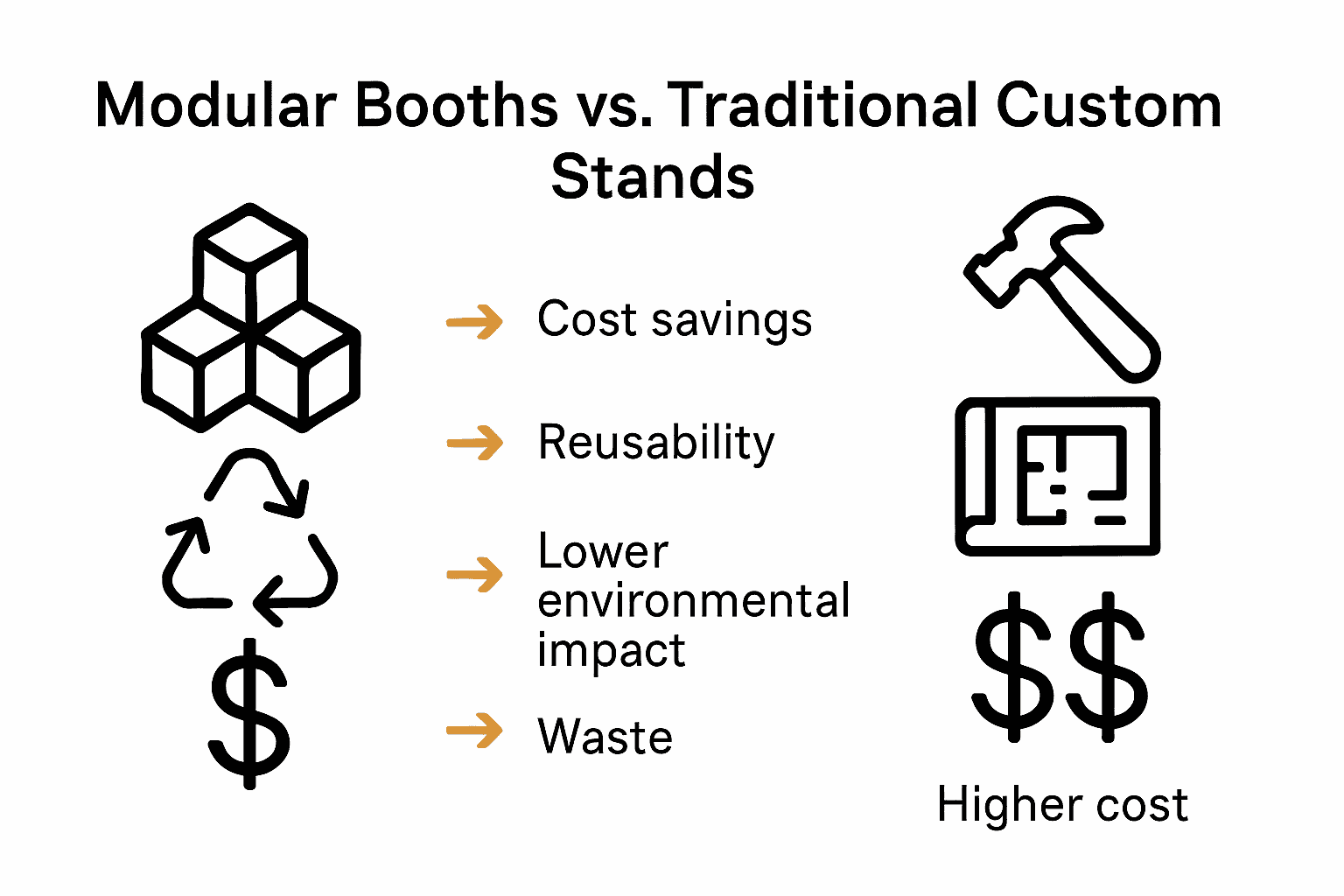 Companies gain the ability to create unique, professional presentations without the financial burden and logistical complexity of traditional custom stand design.
Modular vs Custom Exhibition Stands Guide provides comprehensive insights into selecting the most appropriate exhibition strategy for your specific business objectives.
Transform Your Trade Show Presence with Expert Modular Booth Solutions
The article highlights the key challenges businesses face when selecting exhibition stands that offer flexibility, cost efficiency, and strong brand visibility. If you want to overcome the complexity of event logistics, reduce setup time, and maintain a sustainable display that adapts easily to different shows, modular booth solutions are your answer. From lightweight components and quick assembly to advanced customization options mentioned like graphic interchangeability and technology integration, these solutions empower your brand to stand out without the burden of high costs or wasted resources.
At Adam Expo Stand, we specialize in delivering personalized modular and custom exhibition stands designed to meet your exact goals. Our turnkey services cover everything from conceptual design and 3D visualization to on-site assembly and logistical support. We focus on creating visually impactful displays that reflect your unique brand identity while maximizing flexibility and sustainability. Ready to unlock a smarter, faster, and more cost-effective way to enhance your trade show impact? Explore how our modular booth solutions can amplify your presence and streamline your exhibition experience. Don’t wait until your next event to settle for less. Contact us today to start planning a display that adapts as quickly as your business does.
Frequently Asked Questions
What are modular booth solutions?
Modular booth solutions are flexible, configurable display systems made up of interchangeable components that can be adapted for different events and spatial requirements, allowing businesses to create dynamic and scalable exhibition environments.
How do modular booth systems differ from custom-built stands?
Modular booth systems offer greater flexibility, lower initial costs, and quicker setup and dismantling times compared to custom-built stands, which typically require extensive design and construction for each event.
What are the key customization features of modular booth solutions?
Modular booth solutions allow for graphic interchangeability, structural modularity, technology integration, lighting flexibility, and the compatibility of accessories, enabling businesses to tailor their exhibition space to meet specific marketing goals.
What are the cost and sustainability benefits of using modular booth solutions?
Modular booth solutions can significantly reduce long-term exhibition expenses by reusing core components across events, minimizing material waste, and lowering transportation and storage costs, aligning perfectly with corporate sustainability strategies.